There’s arguably never been a better time to explore the ‘land down under’. Australia’s depth and breadth of fine wines only seems to increase, despite myriad challenges ranging from climatic extremes to swingeing tariffs in major export markets.
While the country’s presence on the global fine wine secondary market remains relatively limited, savvy collectors can – and do – fill their cellars with both historic and new-wave labels.
This introductory guide draws on market data and exclusive tasting reports published for Decanter Premium subscribers to offer a broad overview of the landscape.
Click here to download a PDF copy of this report
Producers to know

(Image credit: Wynns Estate)
Wine-Searcher’s 15 most popular Australian wines
Wine-Searcher rankings offer one indicator of prominence. Its list of the 15 most searched-for Australian wines is dominated by Penfolds ‘bin’ numbers, demonstrating this producer’s importance on the market.
It also features other key producers, such as Henschke, Leeuwin Estate, Giaconda, Torbreck and Bass Phillip.
There are so many more names to explore, of course.
Auction house and retailer Langton’s produces a ‘Classification’ of Australian fine wines – a useful reference for any serious collector.
Its eighth edition, published in late 2023, features 21 ‘First Classified’ and 79 ‘Classified’ wines.
It’s impossible to name everyone in this guide, but a few other top producers to know include:
South Australia: Wynns Coonawarra Estate | Jim Barry | Grosset | Grant Burge | Sami-Odi | Standish Wine Co | Wendouree | d’Arenberg | Yalumba | Peter Lehmann | Shaw + Smith
Victoria: Mount Mary | Yarra Yering | By Farr | Giant Steps | Paringa Estate | Tahlbilk | Bindi | Best’s Great Western
Western Australia: Moss Wood | Cloudburst | Cullen | Vasse Felix | Pierro | Cape Mentelle | Xanadu | Frankland Estate | Woodlands Wines | Stella Bella
New South Wales: Tyrrell’s | Clonakilla | De Bortoli | Lake’s Folly | Brokenwood | Mount Pleasant | Philip Shaw
Tasmania: House of Arras | Tolpuddle | Domaine A
Grape variety melting pot

(Image credit: Pierro Winery)
Trade body Wine Australia said more than 150 grape varieties were ‘crushed’ by wineries in the 2025 harvest.
Many represent only a tiny amount of wine, yet it’s a neat indication of the country’s dynamism and diversity.
Shiraz is Australia’s signature red variety. Cabernet Sauvignon thrives in several areas, from Coonawarra’s ‘terra rossa’ soils to Margaret River, while Grenache is a key grape in McLaren Vale.
Modern Australia is also about cooler-climate Pinot Noir, not to mention Italian varieties like Sangiovese and Nebbiolo.
This report is heavy on red wine, but terroir-driven Chardonnay is a white wine trend to watch.
There’s also long-lived Hunter Valley Semillon and Clare Valley Riesling. And one cannot ignore after-dinner, fortified delights, such as Seppeltsfield in Barossa and producers in Victoria’s historic Rutherglen.
Trend watch: Terroir focus

(Image credit: House of Arras )
Decanter’s Australia editor, Julie Sheppard, said in her review of 2025: ‘Increasingly single-vineyard – and even single plot – wines are highlighting very specific terroirs, showing the considerable work being done by winemakers to refine their understanding of their own land.’
She highlighted Alkina, founded in 2015, noting its ‘detailed, plot-specific wines are rewriting the script for Barossa Shiraz’, as well as Margaret River’s Flametree.
In Tasmania ‘Ed Carr’s stunning Late Disgorged cuvée is proof of the synergy between Tasmanian terroir and sparkling wine.’
See House of Arras, EJ Carr Late Disgorged 2006 (98pts, Charlick for Decanter).
Recent five-star vintages

(Image credit: Windows Estate)
Generalisations are a dangerous game in the wine world, even within a single region, and top producers often show their mettle in challenging years.
Caveats aside, though, South Australia’s 2021 vintage is a notable standout. Decanter’s Tina Gellie said Penfolds’ Grange is ‘a corker up there with headline years 2018, 2010 and 1990’.
In Western Australia’s Margaret River, expert Cassandra Charlick said in Decanter vintage reports that 2023 and 2022 were five-star years for Chardonnay and Cabernet Sauvignon respectively.
Two Shiraz icons: Penfolds, Grange | Henschke, Hill of Grace Vineyard
(Image credit: Dragan Radocaj)
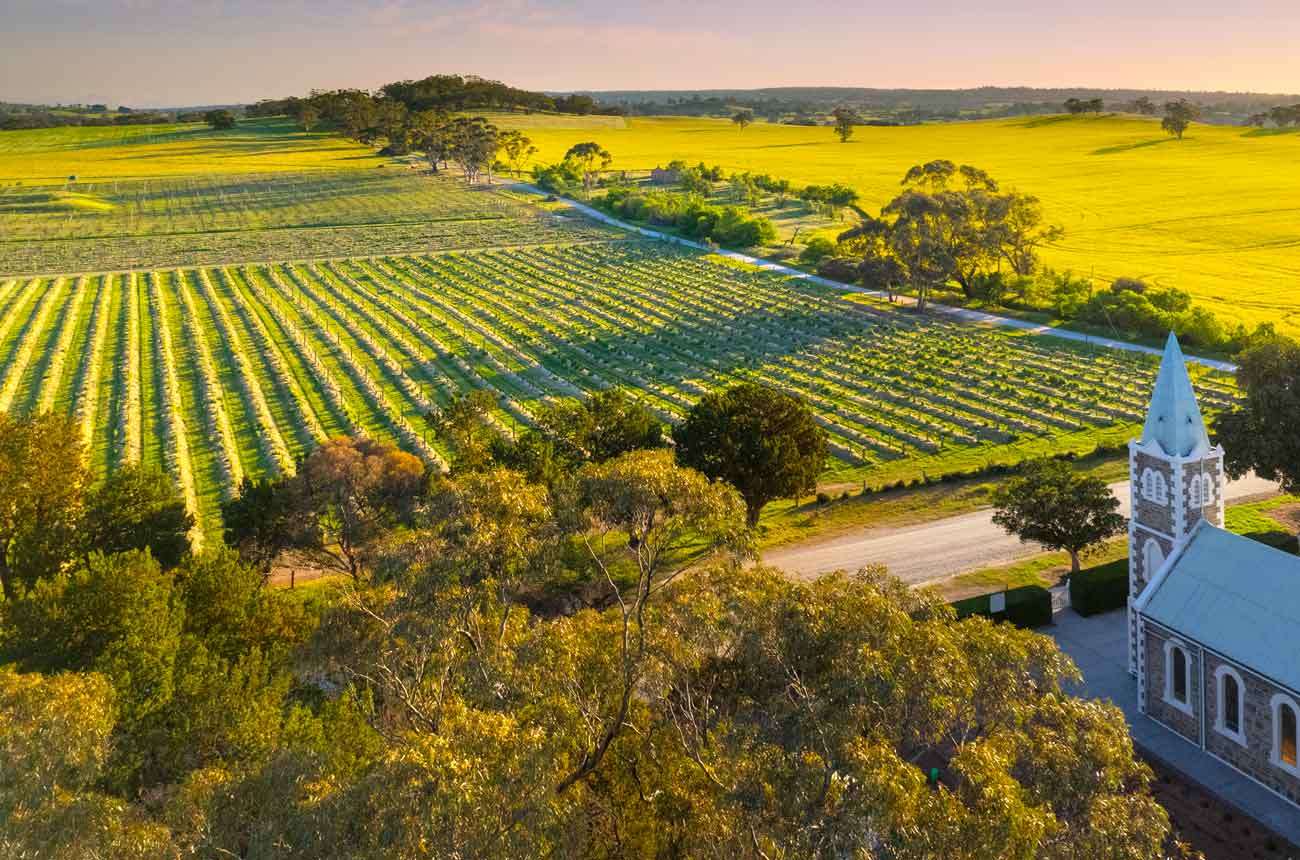
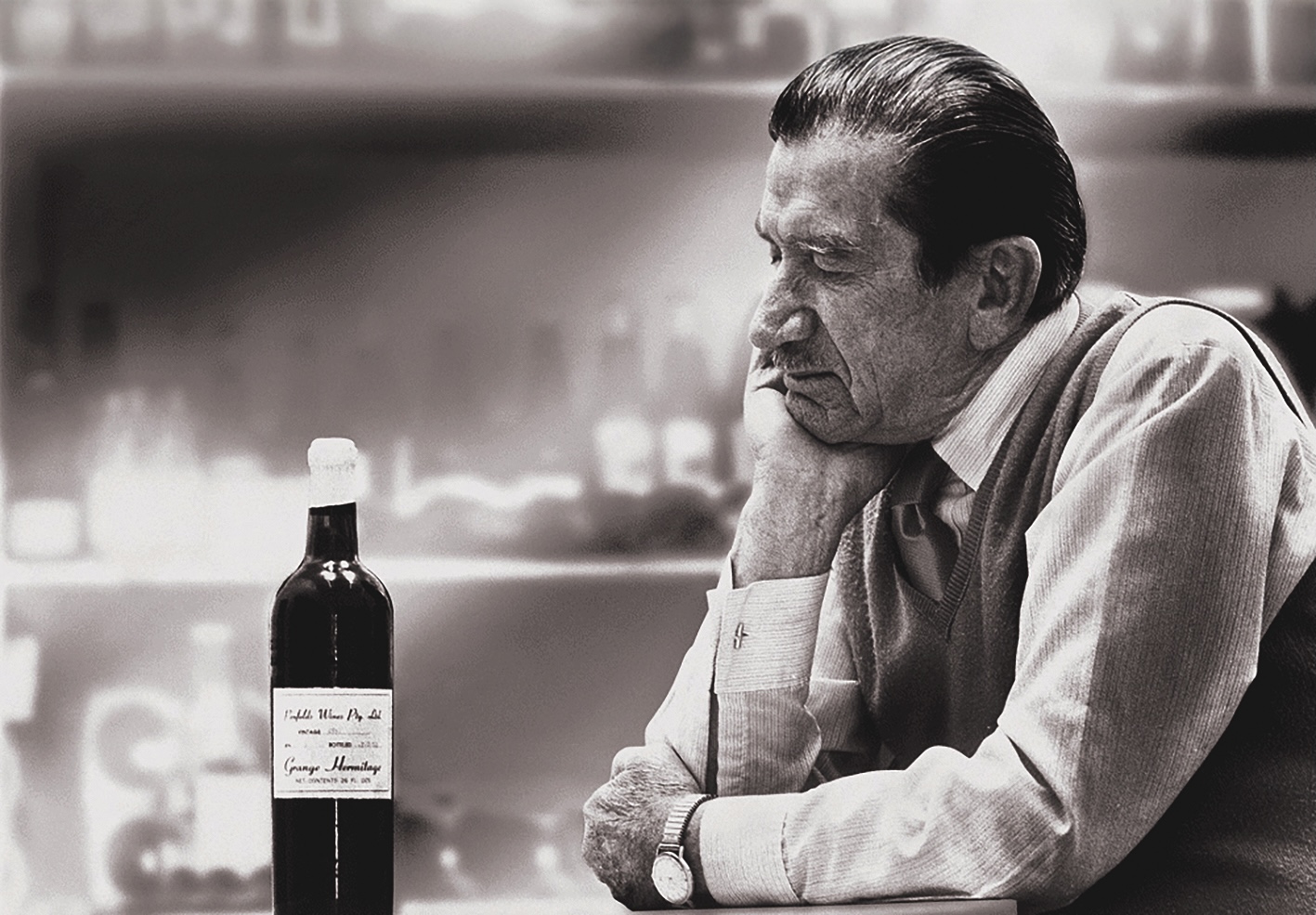
Penfolds, Grange (Bin 95) and Henschke, Hill of Grace Vineyard are among the most expensive Shiraz / Syrah wines in the world, and the most famous – rivalling the great names of France’s Northern Rhône (Grange was labelled ‘Grange Hermitage’ until the 1990 vintage).
Swipe to scroll horizontally
Row 0 – Cell 0
Henschke, Hill of Grace Vineyard
Penfolds, Grange (Bin 95)
Location
Single-vineyard site with 4ha of Shiraz in Eden Valley, South Australia, first planted in 1860. Named by Decanter in 2022 as one of the world’s 12 greatest vineyards.
Multi-region blend, South Australia (2021: 66% Barossa, 26% McLaren Vale, 8% Clare Valley). Typically includes a small amount of Cabernet Sauvignon (6% in 2021).
Created by
Cyril Henschke
Max Schubert
First vintage
1958
1952*
Latest vintage release (Prices may vary internationally)
2022 (May 2026) | Released by winery at A$1,100 per bottle**
2021 (2025) | Released by winery at A$1,000 per bottle
Also in the range
Henschke Single Vineyard Collection, including Mount Edelstone 2022 70th anniversary bottling (A$300).
Penfolds Collection, including St Henri Shiraz, Bin 707 Cabernet Sauvignon.
Decanter Wine Legend
1998 vintage. Average global retail price: US$767
1955 vintage. Average global retail price: US$9,397
Recent vintage to watch
2021 (99pts):
‘Is the 2021 vintage already the standout of this decade? Time will tell, but it’s another latent rippling, muscular beauty, already teasing us with the further complexity and elegance still to come. The tannins are firm but superfine, the oak present but not obtrusive, and the finish almost endless.’ Drink 2026 to 2056. Tina Gellie, Decanter content director.
2021 (99pts):
‘The whole package…The trademark Grange volatile acidity presents itself as macerated balsamic strawberries, tapenade and tarmac, joining mouthfilling silky tannins and sumptuous aromas and flavours of boysenberry, root beer, mocha, salted liquorice and crème caramel.’ Drink 2026 to 2060. Tina Gellie.
Row 8 – Cell 0
*First commercial release
**Including $100 in taxes, excluding shipping
Row 8 – Cell 2
Row 9 – Cell 0
Row 9 – Cell 1
Row 9 – Cell 2
Row 10 – Cell 0
Row 10 – Cell 1
Row 10 – Cell 2
Record breaker: Grange 1951
Although Grange 1955 has the most wins at Australian wine shows, the experimental 1951 is highly sought-after.
Creator Max Schubert gave away most of the 1,800 bottles produced. In 2021, it twice set a price record for a bottle of Australian wine at auction, via Langton’s – fetching A$142,131 in July and A$157,624 in December, including buyer’s premium.
Building a cellar of Aussie all-stars

(Image credit: Giaconda Estate)
A collection of Australian all-stars would today encompass Pinot Noir, and the small-production wines of Gippsland-based Bass Phillip are particularly well-regarded.
Its Reserve Pinot Noir 2010 found notable acclaim (US$1,314 per bottle, Wine-Searcher global average retail price ex-tax). The winery has been owned since 2020 by Burgundy vigneron Jean-Marie Fourrier.
For Chardonnay, Giaconda in Beechworth is a star name for those in-the-know. Its Estate Vineyard Chardonnay is one of several Australian wines released via La Place de Bordeaux, with Ets. JP Moueix the exclusive international distribution partner since October 2023.
Tasting ‘La Place’ releases last year, Decanter’s Georgie Hindle gave 99pts to the 2023 vintage, writing: ‘Super sophisticated and just a gorgeous wine from the coolest vintage since 2017.’ Hindle also gave 100pts to Margaret River’s Cloudburst, Chardonnay 2023.
Decanter Wine Legends
With Grange 1955 and Hill of Grace 1998 already cited, here are more Decanter Wine Legends through the decades for your all-star cellar.
Wine-Searcher.com’s global average retail price per bottle (US dollars, ex-tax) in September 2026 is given as a guide, but prices will vary – particularly for rare wines at auction.
Penfolds Bin 60A, Coonawarra / Barossa Valley, South Australia 1962
Price today: US$16,112 (ex-tax)
Dubbed Australia’s greatest ever wine, this blend of Coonwarra Cabernet with Shiraz from Barossa’s Kalimna vineyard won 19 wine show trophies. Around 5,100 bottles were produced, although never commercially released. Prince Charles, now King Charles III, enjoyed a taste during a tour of Australia in May 2015.
Moss Wood, Cabernet Sauvignon, Wilyabrup, Margaret River, Western Australia 1975
Price today: N/A
Moss Wood is one of Margaret River’s pioneers. ‘The 1975 has long been considered one of the greatest red wines produced in the region,’ wrote Stephen Brook, author of Decanter’s Wine Legends series.
Clonakilla, Shiraz-Viognier, Canberra District, New South Wales 2001
Price today: US$185
Born in 1992, Clonakilla Shiraz-Viognier quickly garnered plaudits but 2001 – from a large crop showing rich flavours and good concentration – is particularly lauded. Brook reported that journalist and wine writer Max Allen declared in Decanter in 2002 that the wine represents a ‘new benchmark for cooler-climate Australian Shiraz’.
Wynns Coonawarra Estate, John Riddoch Cabernet Sauvignon, Coonawarra, South Australia 1982
Price today: US$248
Bordeaux’s 1982 vintage is legendary, yet it was also exceptional in Coonawarra and marked the first bottling of this wine. Brook tasted the ‘82 alongside Sue Hodder, Wynns senior winemaker, in 2013. ‘The colour was deep, the blackcurrant nose lush and generous,’ he wrote, with fine acidity giving ‘intensity and freshness’.
Three more Decanter Legends:
Cape Mentelle, Cabernet Sauvignon, Margaret River, Western Australia 1983 | $68 (last available June 2025)
Jim Barry, The Armagh, Clare Valley, South Australia 1999 | US$205
Tyrrell’s, Vat 1 Semillon, Hunter Valley, New South Wales 1994 | N/A
Finding such rare wines might be tricky, of course. Always check provenance and bottle condition as carefully as possible. As the old cliché goes: if the price looks too good to be true then maybe it is.
New super blend: Grange La Chapelle

(Image credit: Credit Unknown)
Two hemispheres collide in this appellation-defying 50-50 blend of ‘Grange’ Shiraz from South Australia, including fruit from 19th century vines, with Syrah from La Chapelle in Hermitage, Northern Rhône.
The resultant wine has all the hallmarks of a luxury collector’s item, and carries a lofty price tag: averaging US$3,137 a bottle globally, ex-tax (Wine-Searcher.com).
Debut vintage: 2021
Current release: 2022. ‘Simply magnificent,’ wrote David Sly for Decanter (99pts).
Recommended retail price on release: A$3,500, £2,160.
Created by: Peter Gago, chief winemaker at Penfolds, and Caroline Frey, who was head winemaker at La Chapelle before stepping back in 2025.
Hunting value

The Cube at d’Arenberg winery
(Image credit: South Australian Tourism Commission)
Value is a relative concept. Some regional heroes are relatively affordable in a global context and shopping through a top producer’s range can also yield gems, for instance.
Beyond that, don’t discount lesser-explored regions and varieties for drinking pleasure. That could be Malbec in Langhorne Creek, Nero d’Avola in South Australia’s Riverland or Riesling in Western Australia’s Great Southern.
Three value reds under US$50* for the cellar:
Kooyong Estate, Pinot Noir, Mornington Peninsula, Victoria 2023 (95pts)
Sourced from four distinct vineyard blocks, wrote Decanter’s Julie Sheppard in 2025. ‘Harmonious and elegant palate layered with cherries, raspberry and strawberry, with a twist of spicy orange peel and herbal earthy notes beneath.’ Drink 2025 to 2030.
Penfolds, Bin 28 Shiraz, South Australia 2023 (94pts)
A multi-regional blend led by Barossa Valley fruit showcasing ‘ripe, powerful warm-climate South Australian Shiraz’, wrote Decanter’s Tina Gellie after tasting it in 2025. ‘Really impressive already, with more to come.’ Drink 2025 to 2043.
d’Arenberg, d’Arry’s Original Shiraz Grenache, McLaren Vale, South Australia 2020 (90pts)
‘A 50:50 blend of Shiraz and Grenache from low-yielding 19th century vines,’ wrote Sheppard. ‘Easy-drinking now with lots of spicy, herbal, minty dark fruit, fresh acidity and well-balanced tannins, but will also keep nicely in your cellar.’ Drink 2025 to 2032.
*Wine-Searcher global average retail price per bottle, ex-tax, US$.
Australia on the fine wine market

Adam ‘Skip’ Francis, general manager at Bass Phillip
(Image credit: Bass Phillip)
Pricing snapshot
Wine-Searcher global average retail prices (per bottle, ex-tax) in US dollars suggest Giaconda and Bass Phillip have risen relatively strongly in the past five years, despite difficult conditions for the global wine market.
Fine wine prices vary by market, currency and merchant, so data is best seen as indicating a broad direction of travel.
Swipe to scroll horizontally
Five year performance: Wine-Searcher global average retail prices
Wine
Average price September 2026 (US$, all vintages)*
Change in five years
Giaconda, Estate Vineyard Chardonnay
$338
+97%
Bass Phillip, Reserve Pinot Noir
$945
+43%
Moss Wood, Cabernet Sauvignon
$101
+11%
Henschke, Hill of Grace Vineyard
$775
+9.5%
Penfolds, Grange
$639
+0.5%
Wynns, ‘John Riddoch’
$112
-3%
*Data source: www.wine-searcher.com. Prices represent Wine-Searcher’s global average retail price per 75cl bottle, ex-tax, in US dollars.
Prices also vary between vintages. Wynns’ ‘John Riddoch’ 2010 (99pts, Decanter) is a top year and was US$150-a-bottle, while the 2018 vintage (97pts) averaged US$97.
Giaconda’s Estate Vineyard Chardonnay 2016 was up particularly strongly, but Penfolds’ Grange 2014 dropped (See chart below).
While Grange 1990 was up over five years, the data showed it was more expensive 15 years ago (averaging US$802 in June 2011).
Market context

(Image credit: Penfolds)
Pricing is only part of the market picture. Trading on the global fine wine secondary market is largely dominated by blue-chip French and Italian wines, plus top Californian labels.
Collectors clearly do dive in for Aussie gems, especially when they come up for auction via key domestic players, but its presence in global terms is relatively limited.
Geraint Carter, of international merchant Bordeaux Index and the LiveTrade online trading platform, told Decanter: ‘For us, it’s a small and narrow secondary market [for Australian wines]; a bit of Grange and Henschke.’
He said there is broader demand for new releases, highlighting Bass Phillip plus white wines from Giaconda, Leeuwin and Pierro.
Penfolds’ Grange was the only Australian entry in the latest Power 100 index of influential brands on the secondary market, published by Liv-ex, a global marketplace for the trade.
Grange in a tough market

(Image credit: Liv-ex/Future)
A boom on the fine wine secondary market boiled over in 2022, leading to an era of falling prices on many top-tier names that has only recently shown signs of stabilisation.
The headline Liv-ex 1000 index, which tracks prices on some of the world’s most collectible wines, was down 5.3% in five years to 30 April 2026, in pound sterling currency.
Its Rest of the World 60 sub-index, which includes the 10 most recently-released vintages of Penfolds’ Grange, saw a sharper drop of 9.6% in the same period.
While most Liv-ex 1000 region sub-indices have shown greater stability in the past six months. (See Chart 1), the Rest of the World 60 has underperformed.
It dropped 1% in April 2026, with Grange components collectively falling 2% for the month, said Liv-ex in May.
Although trading conditions remain challenging in a highly uncertain macroeconomic landscape, eagle-eyed collectors may also find opportunities.
Last year, Liv-ex cited a UK in-bond release price of £4,584 (12x75cl) for Penfolds, Grange 2021. It said several previous vintages were available for less, including Grange 2014, which was ‘entering its drinking window’.
It’s still possible to find vintages from Grange’s extensive back catalogue. The highly acclaimed Grange 1990 was available in the UK (£516.67 per bottle ex-VAT, Hedonism Wines), for example.
Mature Grange at auction
(Image credit: Penfolds)
Creator Max Schubert’s contemporaries initially took some convincing, but Grange went on to find a place in some of the world’s greatest cellars. At a Christie’s auction of wines from high-profile collector Bill Koch in New York last year, Grange highlights included:
Grange 1971 (6x75cl) | Sold for US$10,625* (high estimate: $7,000)Grange 1976 (6x75cl) | Sold for $7,500 (high e: $5,000)Grange 1998 (6x75cl) in original wooden case (OWC) | Sold for $6,000 (high e: $3,000)Grange 1990 (12x75cl) | Sold for $6,000 (high e: $6,500)
*Final sale prices include buyer’s premium
The same auction also featured a magnum of Henschke’s Hill of Grace Vineyard 1984, which sold for $1,625 (high e: $900).
Auction trends

(Image credit: Shutterstock / Somkid Thongdee)
Despite reports of challenging market conditions, collectors have increasingly been turning up for mature, ready-to-drink wines at auction in recent months, according to Nick Pegna, global head of wine and spirits at Sotheby’s, in Decanter’s Market Watch.
Michael Anderson, head of auctions at Langton’s in Australia, also reported upward momentum in 2026.
‘Our key performance indicators – active bidder numbers, bid volume, clearance rates, and fresh-to-market supply – are all trending upward compared with last year.’
He said collectors viewed Langton’s in-person and online auctions as ‘an essential vehicle for portfolio management and liquidity’. Consistently at weekly auctions is encouraging, he said.
‘When the right wine hits the market, be that Domaine de la Romanée-Conti, La Tȃche 1999 or a “birth year” bottle of 1986 Wynns John Riddoch, the demand is as fierce as ever.’
Six Australian wine auction trends

(Image credit: Elderton)
Here are some of the key trends in the current market, according to Michael Anderson, head of auctions at Langton’s:
Provenance rules
Rarity and provenance were already key, but collectors are becoming increasingly discerning. ‘We have seen our single vendor and single cellar auctions perform exceptionally well, as bidders seek the peace of mind that comes with impeccable, verified provenance.’
Blue-chip focus
‘We are seeing a distinct movement of capital back into “blue-chip” assets, particularly aged Bordeaux and Langton’s [Australian] Classified wines.’
Chardonnay surge
‘Australian Chardonnay – led by icons like Giaconda, Leeuwin Estate, By Farr, and Mount Mary – continues to go from strength to strength.’
Seasonal Shiraz
‘As we head into the cooler months [in Australia], we are seeing a marked rally in premium Australian Shiraz, with historic staples like Henschke, Rockford and Penfolds leading the way. But with the likes of Sami-Odi and Standish [Wine Co] presenting a new wave of Shiraz investment interest.’
Halo effect
While the Langton’s Classification is a ‘primary anchor’ for collectors, a ‘halo effect’ is noticeable. ‘Collectors are beginning to look beyond the headline labels; they recognise that if the estate’s flagship wine is peerless, their other cuvées often represent a “hidden find”.’
Italian grapes rising
There is ‘marginal, yet steady’ rising demand for alternative varieties, led by Italian grapes like Nebbiolo. ‘Names like Luke Lambert and Giaconda are at the vanguard of this movement. These wines are produced in such limited quantities that they are already behaving like true collector’s items in the auction space.’
If you’re considering wine as an investment, remember:
1. The pool of investment-grade wines is small and prices can go down, as well as up.
2. A wine’s condition and provenance can affect value, so consider professional storage in bond (IB).
3. Wine investment is unregulated. Only buy wine from reputable sources, and check provenance and condition as carefully as possible before buying.
4. Factor in costs, such storage and possible selling fees. Storage is often charged at a fixed annual rate.
5. If unsure, always seek professional advice.
Disclaimer
Please note that this report has been published purely for informational purposes and does not constitute financial or investment advice. The report includes Wine-Searcher monthly global average retail prices in US$ to provide a consistent point of comparison, as well as data and opinion from other trade sources. All of this information is subject to change, and the prices and availability of wines cited will vary between countries, currencies and retailers. Decanter and the editorial team behind this report do not accept liability for the ongoing accuracy of its contents. Seek independent and professional advice where necessary and be aware that wine investment is unregulated in several markets. Please be aware that prices can go down as well as up.
Related articles
Topics
Wine Collecting
Wine Investment


Dining and Cooking