
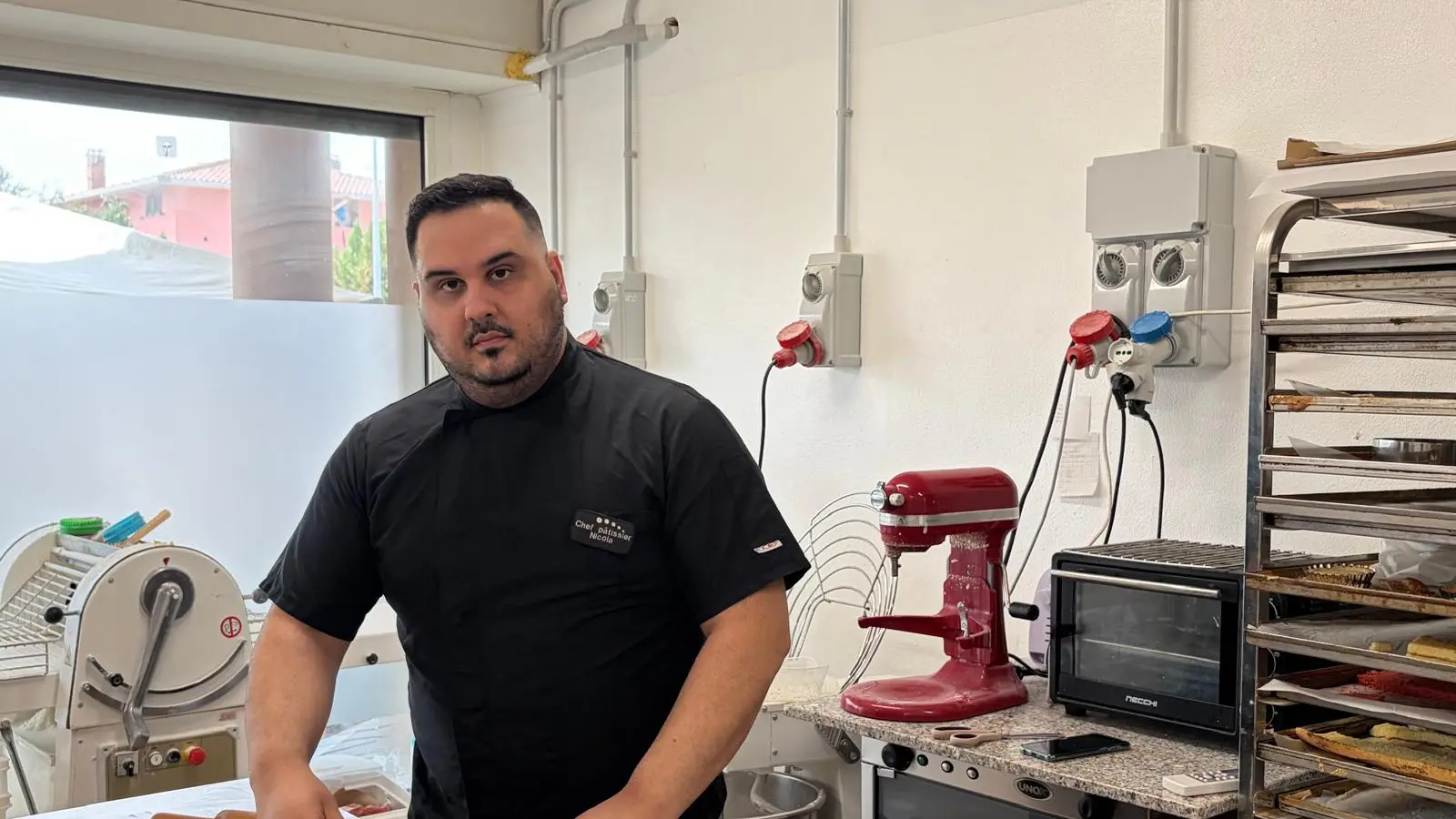
The French croissant meets Sardinia and grandmothers’ sweets, flavored with saba, almonds, ricotta, and the scent of orange. It’s a truly Sardinian challenge for Nicola Cara, 36, a pastry chef from Senorbì, who decided to bring the island’s tradition to one of the most beloved (and consumed) symbols of international pastry making. The result is CroisSard, a registered trademark born almost by chance and transformed into a project destined to transcend regional borders.
The idea came to me in the lab during a test. A customer asked me to reinterpret some traditional Sardinian desserts, those used for celebrations and family memories. And so the idea was born: take the French technique and infuse it with the flavors that express Sardinia .
” We all have a Sardinian dessert linked to a moment in our childhood or to the loved ones who made them for us. Mine is pane saba , which reminds me of my grandmother and takes me back in time,” explains Nicola Cara. “The goal of the dessert I created, later registering the trademark to prevent it from being copied and perhaps stolen, is to convey these same emotions through every bite .”
The first CroisSard line features four different interpretations. There’s one inspired by Saba bread (dedicated to Nicola’s grandmother), with dried fruit, walnuts, Saba, and a hint of orange. Then there’s the pardula, a tribute to one of the island’s most recognizable desserts. Then there’s the seadas, probably the most delicate technical challenge, finding the right balance between ingredients and puff pastry. Finally, there’s the amaretto, where almond and lemon take center stage.
It’s not just a stylistic exercise, but an attempt to speak about Sardinia through a language with a delicious flavour that can be understood even far from our homeland.
The golden and crunchy pastry of the croissant thus becomes a sort of bridge between past and future, between French patisserie and the flavours preserved in Sardinian kitchens.
The project was officially presented in Senorbì a few days ago, and large-scale production began immediately thereafter. And Nicola Cara is already looking beyond. “I want this product to be understood and appreciated by everyone, not just in Sardinia.” A deliciously ambitious challenge: to transform the flavors of Sardinian childhood into a contemporary dessert, capable of traveling without losing its roots.
© Riproduzione riservata
Dining and Cooking