

It’s little surprise that in a country where the traditional gastronomic meal has UNESCO Intangible World Heritage status, food is celebrated year-round with no shortage of pomp and circumstance. France is home to around 1,500 historic, hyper-local gastronomic societies in France known as confréries (brotherhoods), whose velvet-caped members have long hosted plenty of culinary festivals and events honoring everything from pâté en croûte to Brie cheese.
Spanning seasonal events tied to the new harvest, driving livestock to summer pastures in the mountains, or Christian feast days like Carnaval and Christmas, French food festivals marry folklore, regional tradition, and of course, good eats. Of the thousands held each year, here are the ones every gourmand should try at least once.

.jpg)
Colorful citrus sculptures made from lemons and oranges take over Menton during the annual Fête du Citron on the French Riviera. ©DR
1. Fête du Citron in Menton, French Riviera (February)
For nearly a century, lemons have been the star of Menton’s Carnaval celebrations, a holdover from when this Riviera town was the continent’s largest citrus producer. The highlight of this event? The Corso des fruits d’or, held over the last two weeks of February, features nearly 20 monumental floats and three-dimensional scenettes built to an annual theme (such as Voyage to the Stars or Bollywood) from a whopping 150 tons of lemons and oranges.
Visitors can experience them in all their glory on Sundays at 2:30 p.m. or Thursdays at 9 p.m., with a parade along the Promenade du Soleil. (Book a seat for 30 euros, with discounts for kids). The impressive visuals are only part of the allure. A daily artisan market features stands from all manner of local producers of cheese, charcuterie, nougat, honey, and, of course, citrus. This spectacle, drawing 200,000 people each year, earned its spot on UNESCO’s Intangible World Heritage list in 2019.
Where to Stay: Once you’ve eaten your fill of local lemons and oranges, roll over to The Maybourne Riviera, a mere 15-minute drive away. This Two-MICHELIN-Key hotel from the group behind Claridge’s and the Connaught in London, takes full advantage of its cliffside location, with incredible views of the Mediterranean from the bedrooms and the outdoor infinity pool.
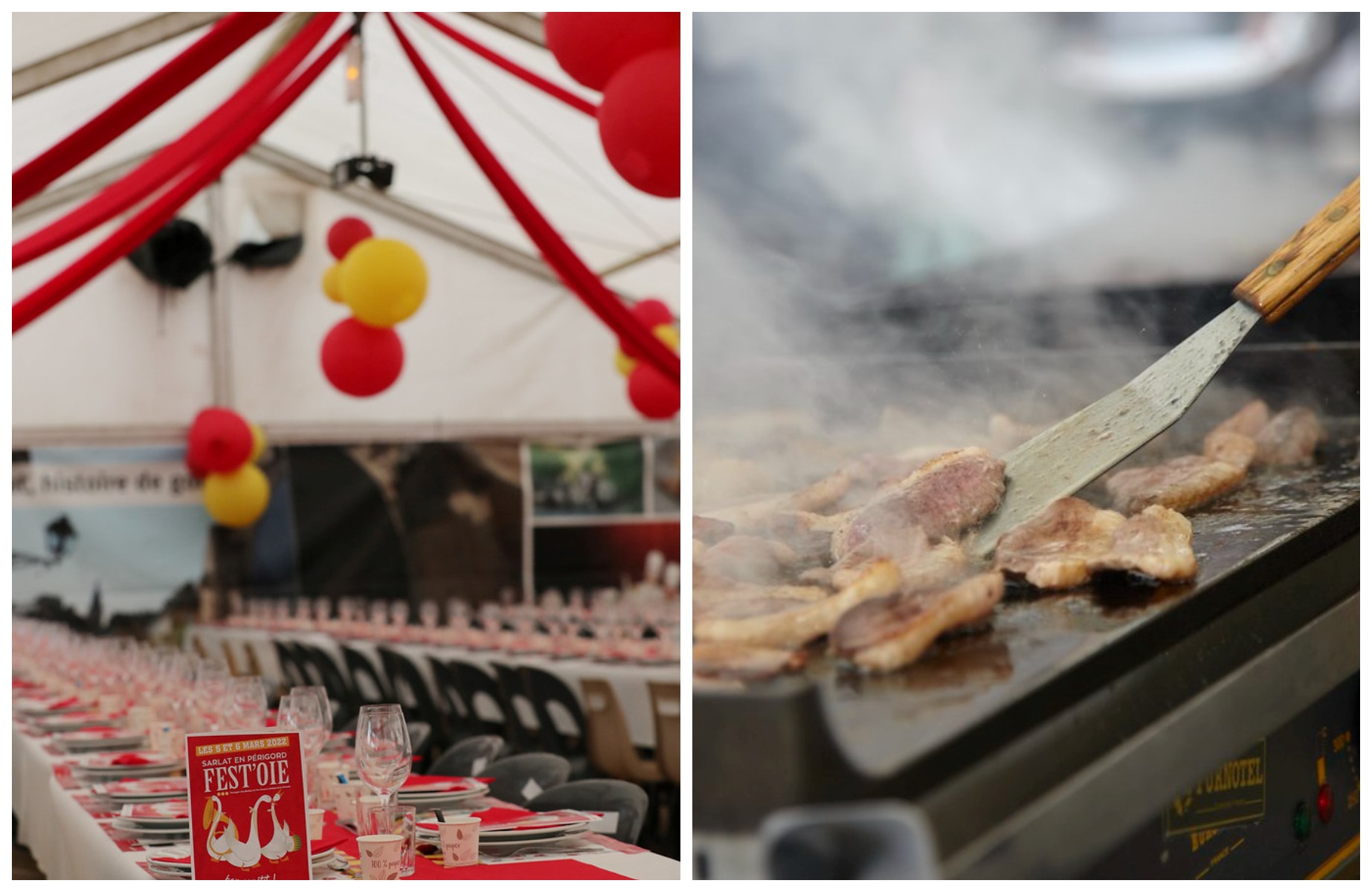
Geese take to the streets of medieval Sarlat during Fest’Oie, a festival celebrating the foie gras and goose-based cuisine of the Dordogne. ©Sarlat Tourisme
2. Fest’Oie in Sarlat, Dordogne (March)
On the first weekend of March, the medieval town of Sarlat comes alive with live music, sizzling sausages… and squawking geese. Here, in the heart of Périgord Noir, in the Dordogne, foie gras is the star of the local terroir, and the two-day Fest’oie celebrates it in all its goosey glory.
On the Saturday, visitors can join cooking workshops, take guided tours of the medieval city, or visit local farms for gavage demonstrations. The Bodeg’Oie evening festivities gather hungry guests on the central Place de la Liberté for duck-and goose-based charcuterie, local wines and beers, and live music. Early Sunday, there’s a farmers’ market, games for kids, plus a chance to gawk at flocks of grey geese being herded along the ancient cobbled streets.
At 11 a.m., attend the prize ceremony for the best local producers before digging into a bowl of goose soup and a banquet of 15 goose-based dishes, from sausage to rillettes, griddled goose heart to unlimited foie gras. Book well in advance; tickets are usually snapped up within hours of going on sale in November.
Where to Stay: Less than half an hour’s drive from Sarlat, the secluded Hôtel les Glycines immerses guests in nature, with expansive gardens and views of the lush Dordogne forest. This former coaching inn retains much of its 19th-century charm, with welcome contemporary fixtures like a Sothys spa and a fine-dining restaurant, Le 1862, which makes full use of produce from the on-site vegetable gardens.
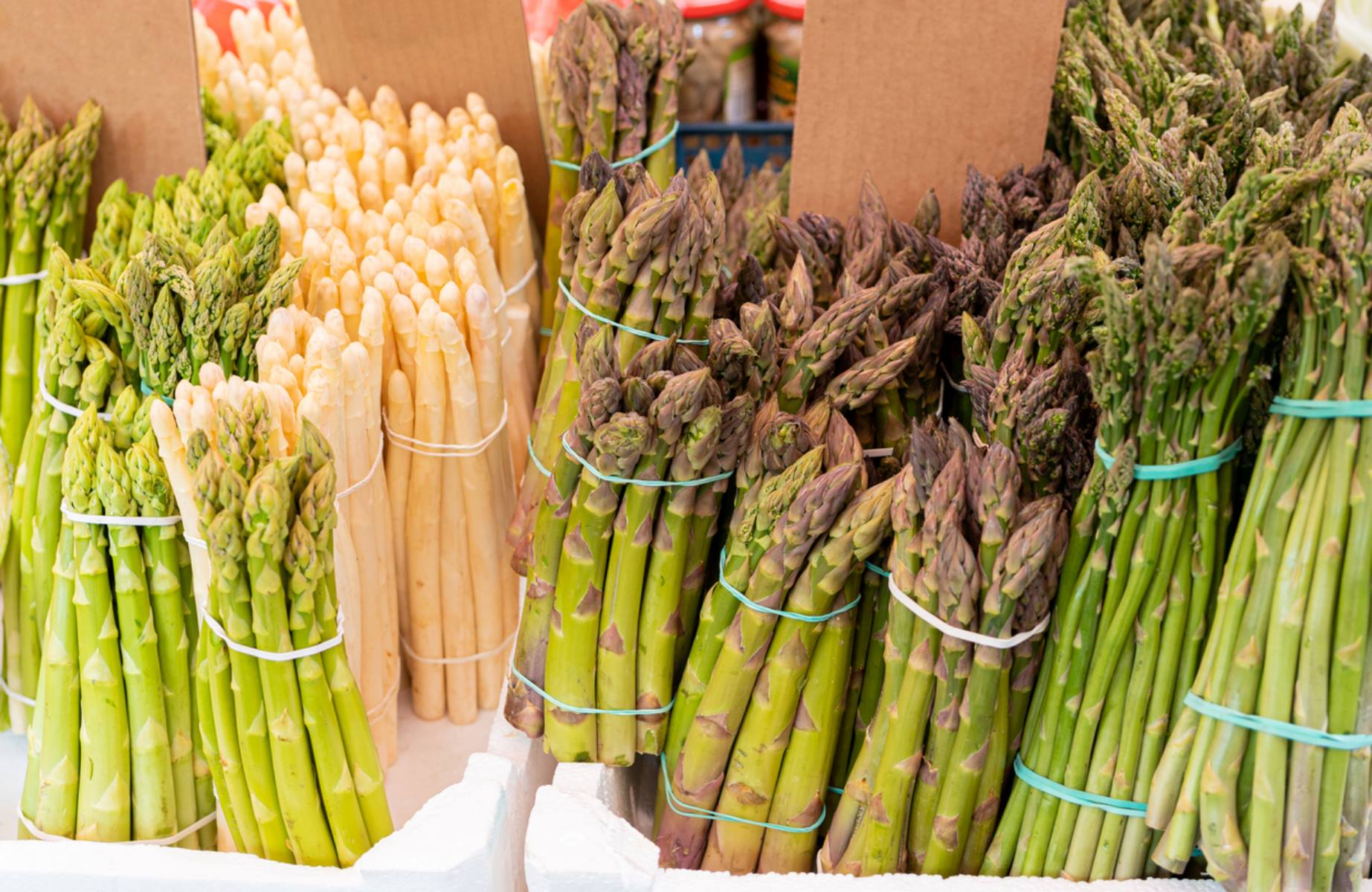
A giant asparagus omelette is one of the highlights of Fête de l’Asperge in Fargues-sur-Ourbise, celebrating the spring harvest in Lot-et-Garonne. ©Oksana Ermak/Istock
3. Fête de l’Asperge in Fargues-sur-Ourbise, Lot-et-Garonne (April)
In spring, France welcomes several regional asparagus festivals, from Alsace’s Balade autour de l’asperge, a gastronomic wander led by the Brotherhood of Asparagus in their three-cornered hats, to the Fête de l’Asperge in the Pays Cathare, where country dances accompany the thistles. But if we had to pick just one, it would be the Fête de l’Asperge in the 338-person town of Fargues-sur-Oubise, which abuts the Landes, home to one of France’s two IGP-protected asparagus.
This event held for half a century, sees over 50 producers showcase asparagus and other local delights like foie gras, bread, wine, and truffles. The deft-fingered can compete in the asparagus bunching world championship, then tuck into a giant (and free!) asparagus omelet made with local eggs and paired with wine from the area.
Where to Stay: Located under an hour away, in the tiny lieu-dit of Peyraguey, the Château Lafaurie Peyraguey (Two MICHELIN Keys) is the fruit of a collaboration between venerable glassmaker Lalique and the much-lauded Sauternes château of Lafaurie-Peyraguey. With just 13 suites, this property uses welcome wisps of modernity to soften its 400-year history. Check out the on-site restaurant, whose incredible wine cellar features over a third of a million bottles — including, of course, some exquisite Sauternes wines.

Flower-crowned Aubrac cattle are driven to their summer pastures during the annual Transhumance festival in South-Central France. ©colette-deltour
4. Fête de la Transhumance in Aubrac, South-Central France (May)
In most of France’s mountainous regions, local cattle farmers mark the arrival of spring with transhumance: a centuries-old practice of leading grazing animals up to the summer pastures. In Aubrac, this tradition takes place in late May, when flower-crowned cattle are guided 9 to 37 miles from their valley homes, as up to 10,000 locals and visitors gather to urge them on while celebrating with music and, of course, great local products.
Friday and Saturday activities usually include concerts, folk dance performances, and demos of local wooden toys for kids. Visitors can also join hikes or a coach trip through the rich local landscapes, with stops at a dairy farm, a local brasserie, or one of the artisans who make the knives that the region is famous for. Sunday is the big day for cattle driving, when visitors can follow the cows up to the grassy pastures (eight euros per adult, free for kids).
However, many opt to cheer them on from Aubrac itself, where the doe-eyed cattle pass through amidst a host of activities including an all-day outdoor market. Book a lunch of local Aubrac beef and aligot — a local specialty of mashed potatoes enriched with so much local tomme fraiche cheese that it becomes almost elastic, making it as captivating to look at as it is delicious to eat.
Where to Stay: Chez Camillou, a half-hour’s drive away, offers an appropriately rustic lodge-style escape, with 37 rooms, an expansive spa, and a substantial breakfast the next morning. If you’ve still got room, Cyril Attrazic’s on-site restaurant has earned a MICHELIN Star for its gastronomic take.
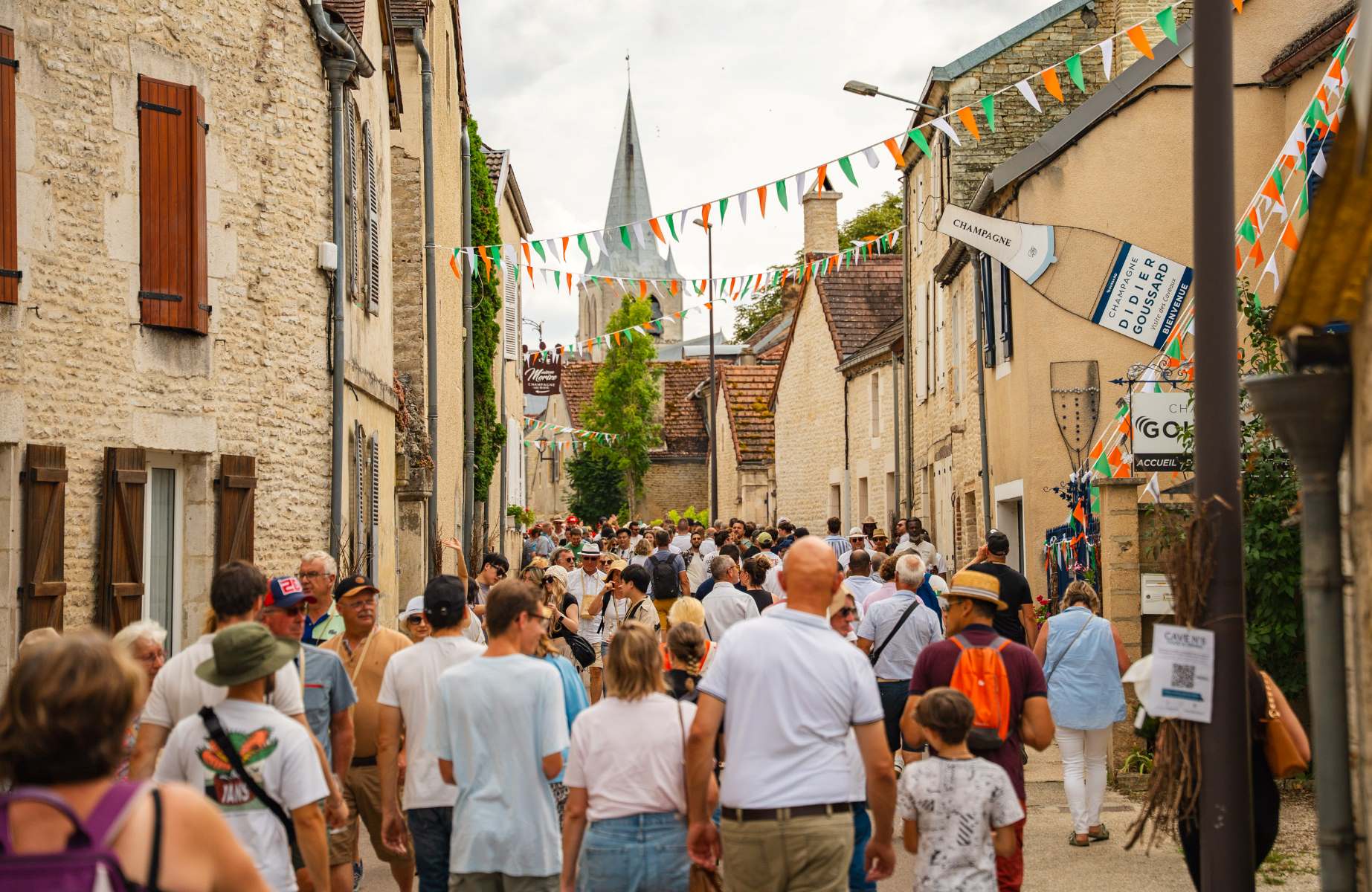
Visitors explore Champagne cellars, taste local cuvées and meet winemakers during La Route du Champagne en Fête. ©Prisma Studio
5. La Route du Champagne en Fête in Champagne (August)
Each summer, French bubbly puts its best foot forward for a weekend of festivities along the Route du Champagne, a 149-mile stretch linking 162 cellars through 32 picturesque villages in the southeastern Côte des Bar. A different section of the route is spotlighted every year, with about 20 winemakers inviting visitors to discover their crus. For the entry price of 45 euros, participants receive a special flute and a guidebook that lets them visit each participating cellar, taste their wares, and discover their savoir-faire. Events over this weekend include guided tours of historic cellars, masterclasses with top sommeliers, and discovery of related crafts like barrel-making.
Where to Stay: A shuttle to and from Troyes makes it easy to reach Le Champ des Oiseaux, a boutique hotel with just 12 rooms and suites featuring the region’s emblematic architectural details like exposed beams, antique tiled floors, and a beautifully rustic fireplace in the dining room. The outdoor pool is the ideal place for a plunge after a long day of walking and tasting.

Espelette peppers take centre stage during the annual Fête du Piment d’Espelette in France’s Basque Country. ©Florence LASAGA/iStock
6. La Fête du Piment d’Espelette in the Basque Country (October)
France’s most famous chili pepper takes center stage at the Fête du Piment d’Espelette, a celebration of Basque heritage, culture, and cuisine. Held over a weekend in late October, the festival features a producers’ market where you can taste Espelette-inflected products, plus revel in Basque dancing, live concerts, and a parade. On Saturday night, don’t miss the convivial dinner under the covered market featuring local specialties like axoa, a traditional veal stew seasoned with the venerable chili. The 10 a.m. Mass on Sunday morning includes a blessing of the peppers, before a noontime award ceremony for the year’s best offering.
Where to Stay: Accessible by shuttle bus, Auberge Basque in Saint-Pée-sur-Nivelle makes for an ideal base during the festival, especially as you can feast on Chef Cédric Béchade’s cuisine. After a decade at Alain Ducasse’s Plaza Athénée, he transformed this 17th-century farmhouse into a gorgeous inn that marries local charm with luxury details like a heated pool and spa.

Cheesemakers and food lovers gather to celebrate France’s raw-milk cheeses at the National du Fromage au Lait Cru in the Loire. ©Chalffy/iStocl
7. Le National du Fromage au Lait Cru in the Loire (October)
The National du Fromage au Lait Cru is a newer festival founded in 2024 by former cheesemonger Thierry Cartereau. His mission? Showcasing raw milk cheeses — and their producers — in a country where industrialization has taken root and just 16 per cent of all cheese is now made with raw milk. The three-day event includes an outdoor market open to all, featuring producers not just of cheese but also bread, beer, wine, and more.
Several contests over the weekend reward not just young cheese producers but also creative cooks transforming it into burgers or even desserts. On both Saturday and Sunday, visitors can take part in free tastings, workshops, and other events led by professionals. (With only 30 spots per event, booking is a must to avoid disappointment!) On Monday, a panel of expert judges will choose the winner of the French Raw Milk Cheese Championship, rewarding the best in the category.
Where to Stay: Only a 15-minute drive from the festivities in Joué-lès-Tours, the 41-room LABE hotel is an unapologetically contemporary, playful boutique hotel, that nevertheless claims to be inspired by the heritage of the Châteaux de la Loire. Based in the heart of Tours, it sits mere steps from the city’s historic center.
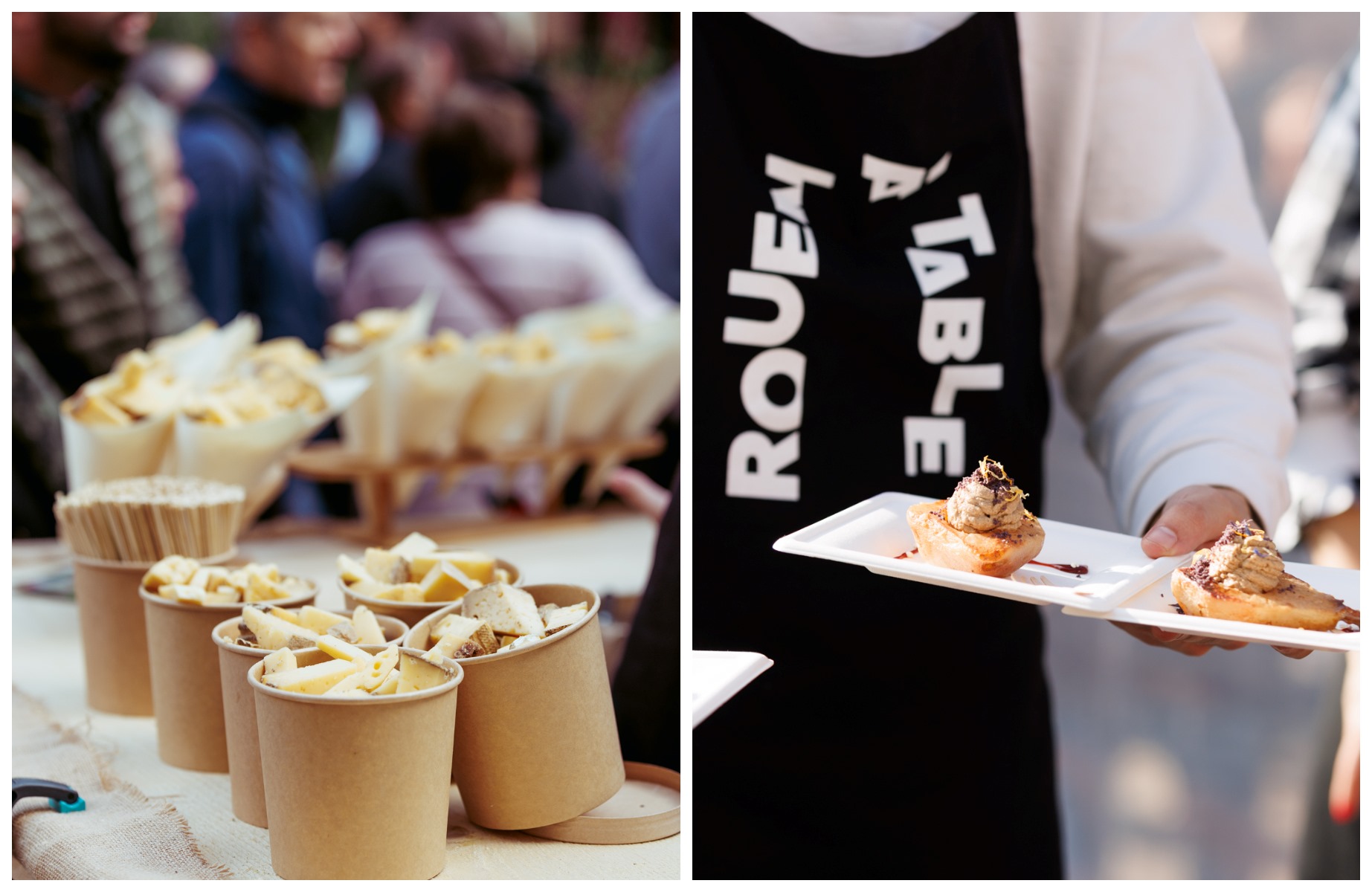
Local producers fill Rouen’s historic centre with cheese, seafood, charcuterie and other regional specialities during the Fête du Ventre. ©David Morganti
8. Fête du Ventre in Rouen (October)
This is the time of year when Rouen celebrates stomachs — literally. Each year, the Norman city invites no fewer than 150 producers of cheese, fish, produce, and charcuterie, as well as newer local delicacies like saffron, mustard, and even wine, to showcase and sell their wares to the more than 150,000 visitors who flock to the picturesque old town for this singular event.
Convivial, gingham-clothed tables along the easy-to-follow route offer the perfect place to dig into delicacies like baked Camembert, scallops grilled to order, or local apple fritters. Between bites, watch culinary demonstrations, listen to local music, and stop by the temporary petting zoo to say hello to the Norman dairy cows.
Since 2024, the city has also hosted Rouen à Table, a festival showcasing its gastronomic heritage; In 2021, Rouen became the only French city to join the UNESCO Creative Cities Network in the food category. The third edition of this festival will invite chefs to draw inspiration from music, whether classical or contemporary. Expect guided walking tours complete with tastings as part of the festivities.
Where to Stay: After a day of dining, the majestic Hôtel de Bourgtheroulde is the perfect place to give your belly a break. This 16th-century mansion in the heart of Rouen subtly welcomes luxury flourishes like a 700-square-meter spa, an indoor swimming pool, and Philippe Starck furnishings.
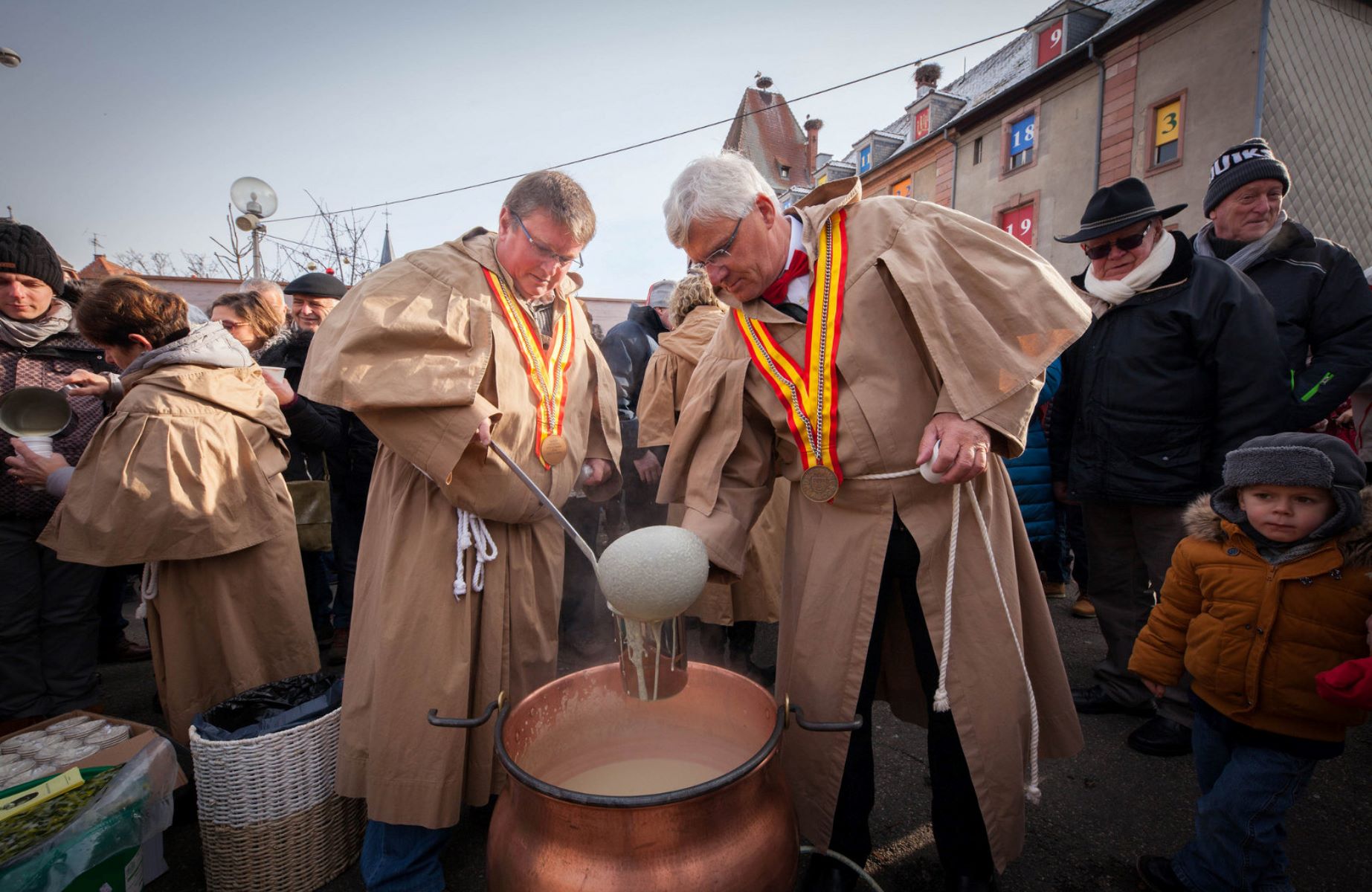
Traditional wooden chalets and local specialities, including Munster cheese soup, fill the Christmas market in Munster, Alsace. ©V. Schneider – ADT
9. Munster Christmas Market in Alsace (November-December)
Alsace’s Christmas markets are famous for a reason, and while many head straight to Strasbourg, the self-proclaimed “capitale de Noël”, foodies should instead venture to Munster. Here, in the shadow of the striking Saint-Léger church, built of pink local stone, a winter wonderland dotted with traditional wooden chalets offers an array of tantalizing aromas and tastes. Of particular note: a soup featuring the town’s heady namesake cheese, prepared by the brotherhood Saint-Grégoire du Taste Fromage de Munster according to an authentic recipe by Michelin-starred chef Emile Jung, available on certain Fridays, Saturdays, and Sundays during the festival.
Have more of a sweet tooth? Enjoy hot chocolate accompanied by Advent hymns and light shows at the Evangelical Methodist church. The local hiking association, le Club Vosgien, has shared its passion for local trails since the late 19th century and offers guided walks throughout the festivities. Visitors can also enjoy regular concerts, crèche displays, and even a majestic spectacle when Saint Nicolas descends from the sky on the first Saturday of December, accompanied by his naughty Zwarikalas elves.
Where to Stay: In nearby Colroy-la-Roche, La Chenaudière started with just 10 simple rooms in 1974. More than 50 years later, it’s a fully fledged five-star hotel and spa with Two MICHELIN Keys, decked out in rich shades of blue, green, and black that evoke the nearby forests and mountains. It’s handsome One-Star restaurant is the ideal setting for a wintertime, romantic tête-à-tête.
Hero Image: The Fête du Ventre (Belly Festival) in Rouen is a must-do when it comes to the best food festivals in France for the array of food on offer and atmosphere. ©David Morganti

Written by
Emily Monaco
Emily Monaco is a MICHELIN Guide contributor. An American writer based in Paris since 2007, she is a culinary journalist, tour guide, podcaster and professor of French food and culture, and examines the ways food reflects and shapes history, identity and everyday life.
Dining and Cooking