
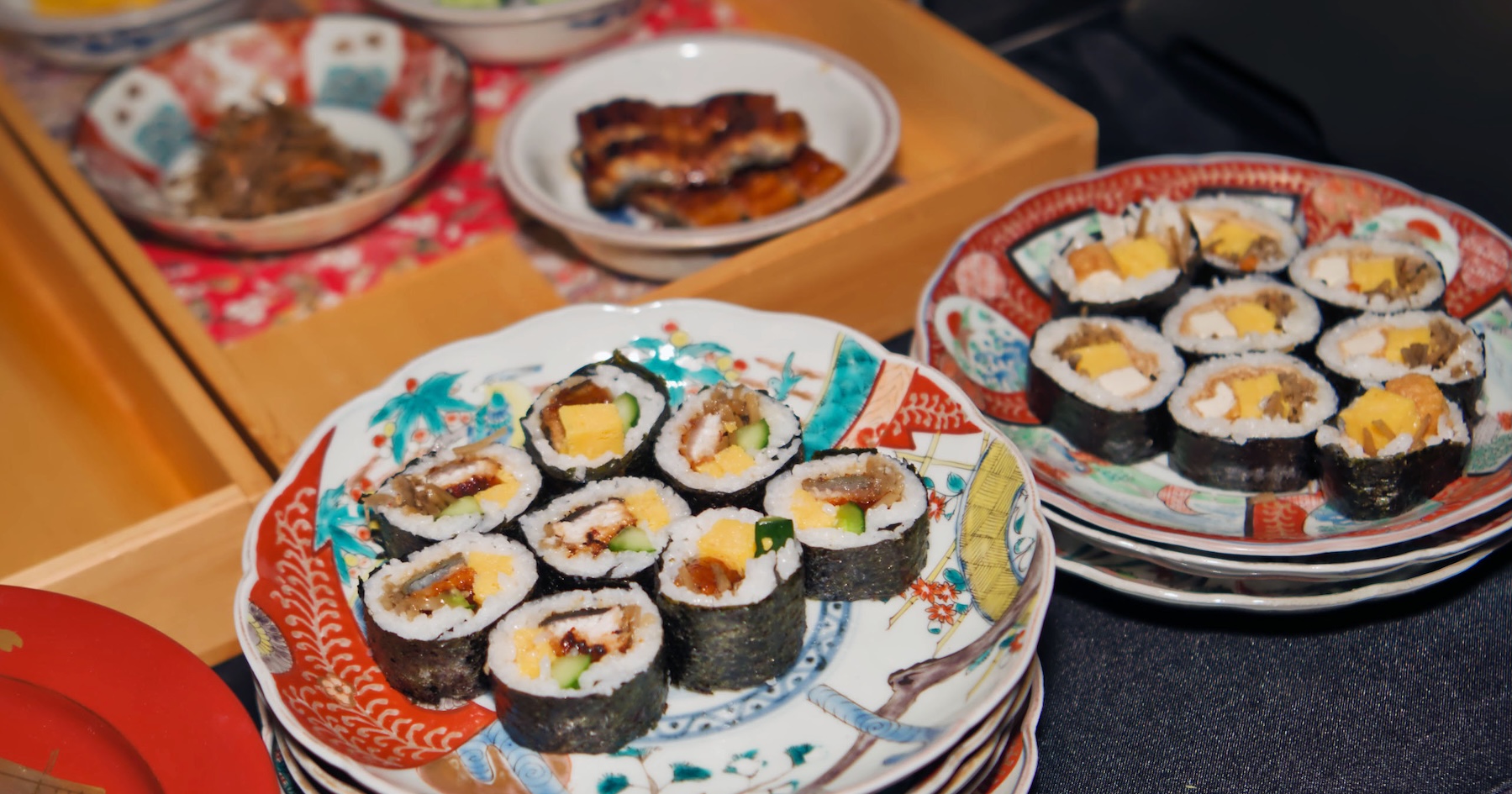
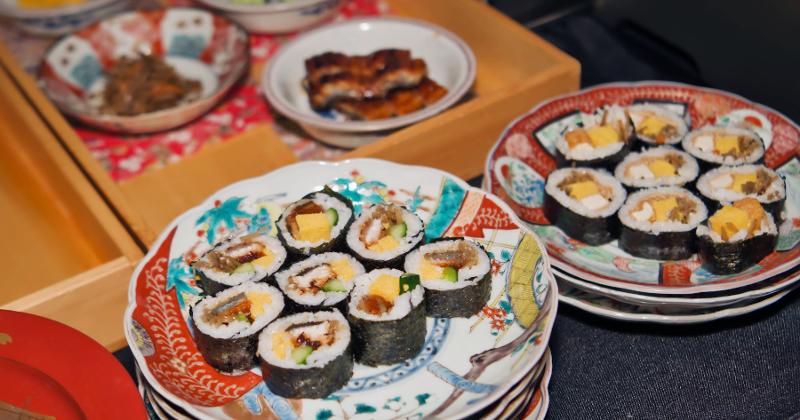
Zero-waste Obanzai Rolls filled with vegetables, tofu, cooked beef, and other ingredients. | Photo by Hachikin Creative
Traditional Kyoto-style home cooking is based on the Japanese principle of Mottainai, the belief that ingredients and resources should be valued and used to their fullest potential.
Tabletop sushi robots are now taking that age-old zero-waste ethos into the 21st century with the creation of Obanzai Rolls.
The premise of Mottainai is to make sure all parts of food are used so the household will have meals for the next day. But hundreds of years ago, there was no refrigeration, so each Obanzai dish had to last a long time without that preservation equipment, explained Japanese food designer and cultural strategist Sayaka Wada at a demo hosted by robotics company Autec. “Obanzai originated in Kyoto but it’s used all over Japan now, where people think of it like soul food; mom’s meal that really warms up your heart,” she said.
Typically, Obanzai dishes feature root vegetables such as taro, burdock root, or pumpkin simmered in a broth flavored with dashi or light sauce. But using Autec’s sushi robots, Wada translated these ingredients into three different Obanzai Rolls featuring pieces of cooked beef, fish, tofu, and vegetables.
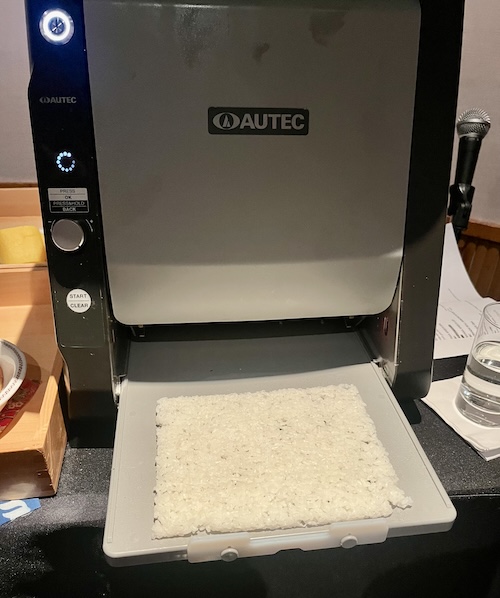
The sushi robot can flatten a sheet of cooked rice in seconds. | Photo by Pat Cobe
Wada began with a Tofu Atsu-age Roll. When cooked rice was fed into one of the robotic machines, it formed a base for the roll in seconds. Layered on top of the nori and rice were seasoned and simmered tofu, atsu-age or deep-fried tofu, burdock root, and tamagoyaki (egg). Once those ingredients were added, another sushi robot quickly rolled it up and it was ready to eat.
Next up was a Unagi Kabayaki Roll made with eel, pickled cucumbers, burdock root, and tamagoyaki (egg), followed by the Beef Shigureni Roll, a combination of simmered beef, takuan (bright yellow pickled daikon), and burdock root.
While Americans are used to sushi featuring raw fish rolled up with rice and seaweed, these Obanzai use cooked, pickled, and non-perishable ingredients that conform with their zero-waste premise. But they also infused the rolls with a deeper, more savory flavor.
Members help make our journalism possible. Become a Restaurant Business member today and unlock exclusive benefits, including unlimited access to all of our content. Sign up here.
Pat plans and executes menu, food and drink stories for Restaurant Business and hosts the weekly Menu Talk podcast. She provides in-depth coverage of chefs, trends and menu innovation.
View All Articles by This Author
Dining and Cooking