Friday: rice flour mushi-pan, chicken and broccoli salad (yogurt, Parmesan, shiokoji), Kiri cheese
Thoughts and impressions:
1. High-protein is relative. For the purposes of this book it basically means over 20g per serving and relative to the overall calorie content of the bento. In the west that’s probably not considered high-protein particularly.
2. The goal is to make bentos extremely fast and easy by basically only making a single dish on the day and having everything else be very simple or prepped ahead.
3. As a result, basically every bento has broccoli and minitomato as the sides, sometimes boiled eggs or almonds, occasionally a cut of Kiri cheese. She says that’s because broccoli is relatively high protein among vegetables, but I think it has a couple other more important advantages: (a) it’s a beautiful color (b) it’s textured and volume-y and takes up space in an attractive way (c) it is available all year round and at generally the same price, at a pinch even frozen, even from a conbini
4. I broke with the book occasionally, sometimes mixing up the sides. She never makes tamagoyaki (presumably because it breaks the “only cook one side dish” system) but I did because I like it and because I’m pretty used to making it.
Pros:
* these were very quick to make
* very inexpensive
* very few dishes generated in the cooking
* everything was tasty
* I don’t like meal prep, but this was the level of prep I can handle (boil some eggs, make a salad chicken, etc)
* I ate fish 3/5 days, which is good; I am trying to emphasize fish and get away from beef and pork
* I liked the options for days when you don’t want or wake up and discover you don’t have any rice — udon is easy to keep in the freezer for these cases and the mushi-pan took minutes.
Cons:
* if you follow the system as is, you won’t get much sense of seasonal change, if that’s something you like to get from your bento (I do) — that said, there’s nothing stopping one using this as a base system and rotating in seasonal veggie side dishes when you have time and inclination to make them
* over a long time, this might get boring, but again one could easily just use it as a base and adjust flavors and other sides when possible
Overall:
I liked this a lot more than I expected. Having the whole thing be pretty brainless and having most of the work taken out of menu planing (just pick a main, the sides are always the same) made it very easy and stressless. I have a couple days a week where I usually have to be at work earlier for meetings and really appreciated the simplicity. This is a good base system for people who want to start making bentos regularly but fall off over time or are very busy.
I am debating testing another book next week or sticking with this one for another week (to see if I start to get bored, and because there were some salad-type and sandwich bentos in there that I am curious about but didn’t get to this week)




2 Comments
Your presentation is awesome, these all look so tasty!
I thought this week it would be fun to commit to working out of a single cookbook and sort of testing it out in more depth.
I picked a newer one, “High Protein Container Bento” by Naté.
Dishes first.
Thursday was my fave so that is first in the photo line (but it was a close-run thing with Monday). The rest are in chronological order.
Thursday: Gochujang udon, salad chicken (homemade), broccoli, minitomato, yude-tamago (and Korean nori, but I forgot to put it in the picture)
Monday: Mackerel miso soboro, broccoli, minitomato, barley rice
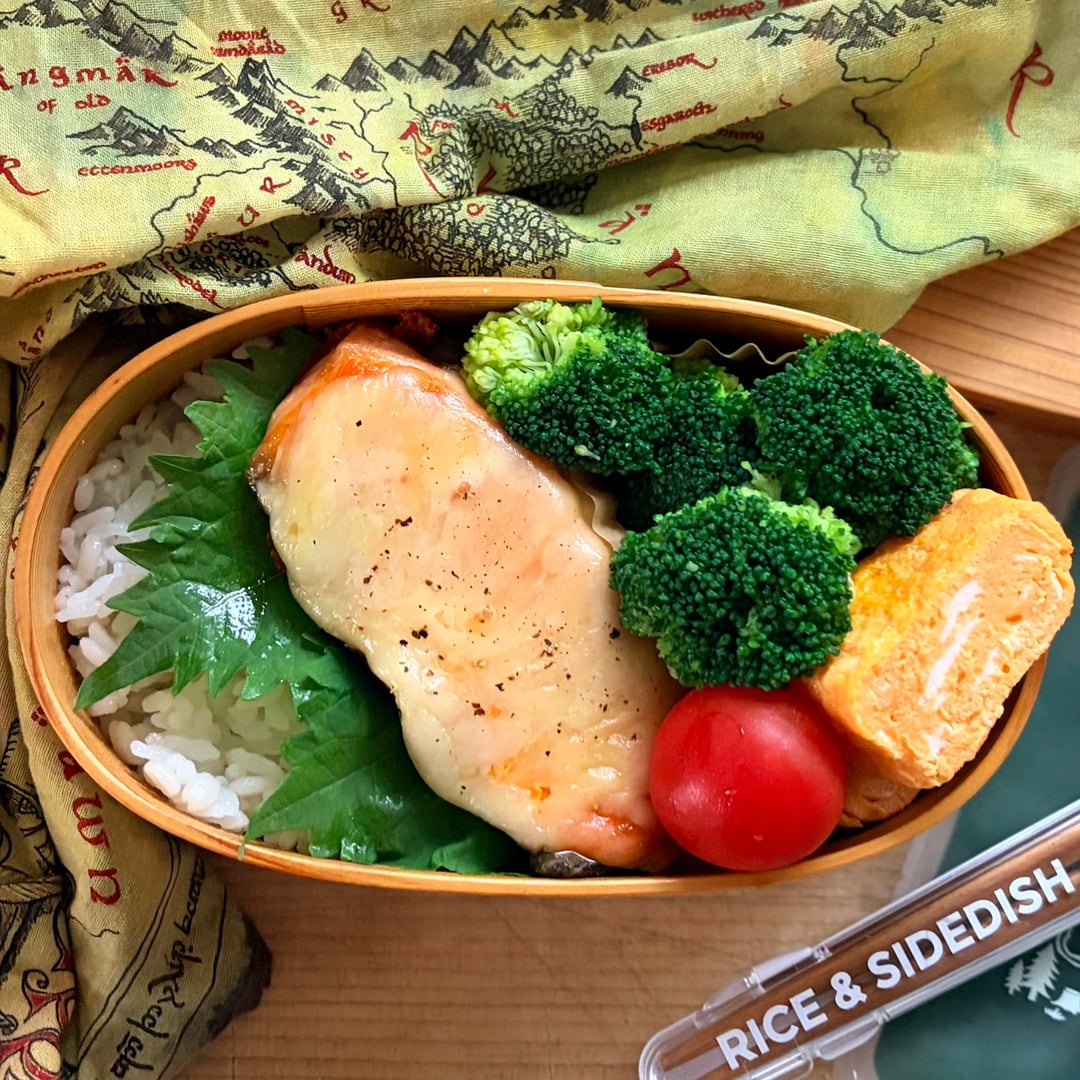
Tuesday: cheese-baked salmon, tamagoyaki, broccoli, minitomato, barley rice
Wednesday: Tuna cabbage curry, barley rice, yude-tamago, broccoli, minitomato
Friday: rice flour mushi-pan, chicken and broccoli salad (yogurt, Parmesan, shiokoji), Kiri cheese
Thoughts and impressions:
1. High-protein is relative. For the purposes of this book it basically means over 20g per serving and relative to the overall calorie content of the bento. In the west that’s probably not considered high-protein particularly.
2. The goal is to make bentos extremely fast and easy by basically only making a single dish on the day and having everything else be very simple or prepped ahead.
3. As a result, basically every bento has broccoli and minitomato as the sides, sometimes boiled eggs or almonds, occasionally a cut of Kiri cheese. She says that’s because broccoli is relatively high protein among vegetables, but I think it has a couple other more important advantages: (a) it’s a beautiful color (b) it’s textured and volume-y and takes up space in an attractive way (c) it is available all year round and at generally the same price, at a pinch even frozen, even from a conbini
4. I broke with the book occasionally, sometimes mixing up the sides. She never makes tamagoyaki (presumably because it breaks the “only cook one side dish” system) but I did because I like it and because I’m pretty used to making it.
Pros:
* these were very quick to make
* very inexpensive
* very few dishes generated in the cooking
* everything was tasty
* I don’t like meal prep, but this was the level of prep I can handle (boil some eggs, make a salad chicken, etc)
* I ate fish 3/5 days, which is good; I am trying to emphasize fish and get away from beef and pork
* I liked the options for days when you don’t want or wake up and discover you don’t have any rice — udon is easy to keep in the freezer for these cases and the mushi-pan took minutes.
Cons:
* if you follow the system as is, you won’t get much sense of seasonal change, if that’s something you like to get from your bento (I do) — that said, there’s nothing stopping one using this as a base system and rotating in seasonal veggie side dishes when you have time and inclination to make them
* over a long time, this might get boring, but again one could easily just use it as a base and adjust flavors and other sides when possible
Overall:
I liked this a lot more than I expected. Having the whole thing be pretty brainless and having most of the work taken out of menu planing (just pick a main, the sides are always the same) made it very easy and stressless. I have a couple days a week where I usually have to be at work earlier for meetings and really appreciated the simplicity. This is a good base system for people who want to start making bentos regularly but fall off over time or are very busy.
I am debating testing another book next week or sticking with this one for another week (to see if I start to get bored, and because there were some salad-type and sandwich bentos in there that I am curious about but didn’t get to this week)