
One of Paris’ lesser-known pleasures is that you can go on a gastronomic Tour de France without leaving town. This is because the French capital is brimming with tables that serve almost all the regional cuisines of Gaul. After a recent period of decline, as famous institutions such as Chez Jenny — an Alsatian brasserie near Place de la République (Paris 11th) — closed, and the owners of several well-known regional restaurants in Paris retired and returned home, this type of restaurant is making a roaring comeback.
For instance, at Elsass (”Alsace” in the Alsatian dialect) near the Canal St. Martin, the owners explain that the assiduous authenticity of their menu — they source almost everything they serve from farms in Alsace — reflects their commitment to sustainability. “Traditional Alsatian ways of eating have always yielded delicious wholesome food while also respecting nature,” says Guillaume Keusch, an Alsatian native and one of the co-owners of this table, which presents a fresh, contemporary take on Alsatian farmhouse favorites.

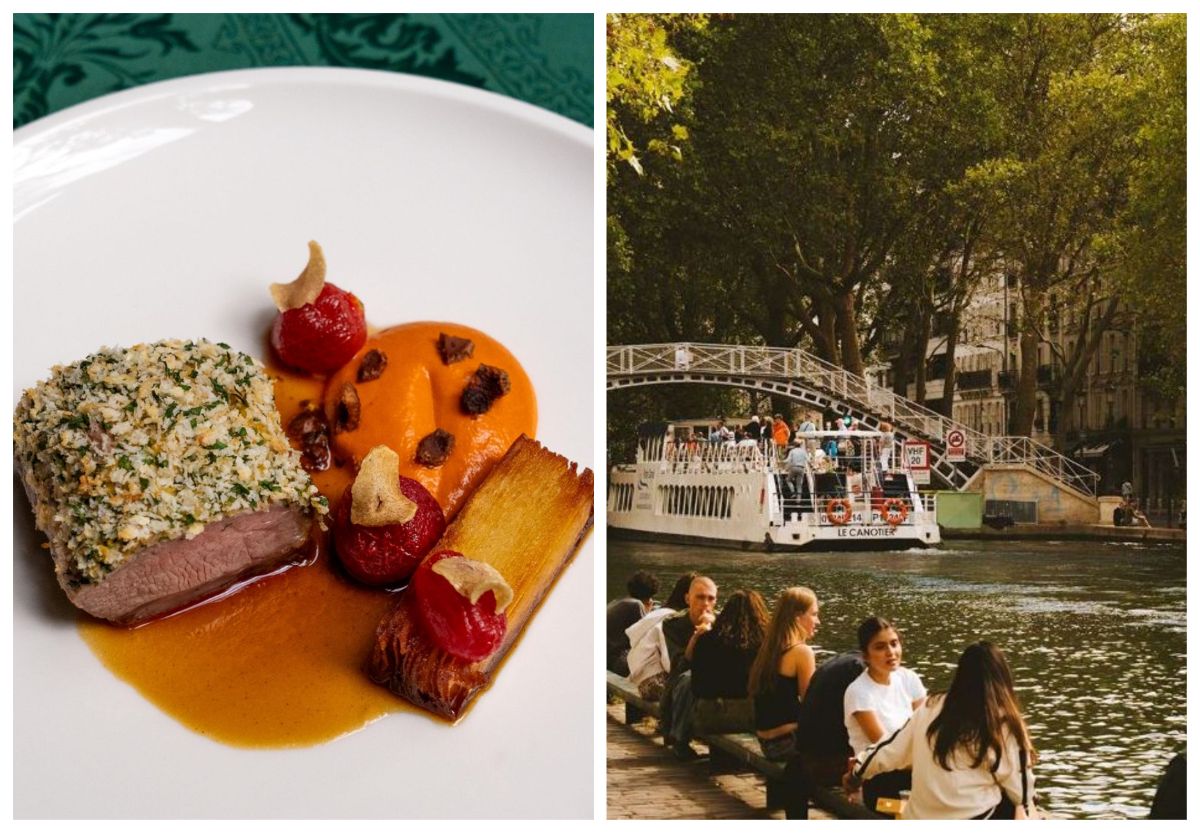
Canal St. Martin is one of the hottest dining destinations in Paris, and you’ll find Alsatian restaurant Elsass a short walk away. © Joann Pai
A Bit of Personal Backstory From a Confirmed Foodie
I first discovered Paris’ regional restaurants when I moved across the Channel from London more than 30 years ago. On rainy autumn nights, places like the now-gone (but still much missed) La Providence in the Rue de la Sourdiere and Chez Maître Paul in the Rue Monsieur Le Prince were havens for me because they were run by kind, patient people who were proud of the regional cooking they served — Alsatian and Franche-Comtoise, respectively — and coddled me when I came in tired and alone after working late. It was still new for me to eat alone in a restaurant, so they were extra solicitous in putting me at ease.
Having previously known only the monolithic version of Gallic gastronomy called “French cooking,” I was intrigued by the richness and variety of the nourishing, comforting dishes at the regional tables I haphazardly came across. My first meal of cassoulet at the cozy Auberge Pyrénées Cévennes left me with a permanent longing for this gastronomic emblem of Southwestern France, while the chicken in cream sauce spiked with vin jaune and walnut cake with mocha icing at Chez Maître Paul made me weak in the knees. I didn’t recognize it at the time, but I was also receiving an invaluable education in truly understanding French cooking, because the regional kitchens are its bedrock.

Find your hotel
Please select destination / Please select travel dates
You cannot book more than 31 days
Choose a destination first to see available dates
How Napoleon Brought Regional Cuisine to Paris These atmospheric embassies of provincial French culinary pleasures originally emerged with the explosive growth of the French railroad system after 1837, when the first passenger line connected Paris to suburban Saint-Germain-en-Laye.
Prior to that, personal knowledge of France’s great gastronomic delicacies was reserved for the king, his court and aristocrats: Not only were coveted foods like Norman oysters and Alsatian foie gras rare and perishable, but the complex logistics of delivering them fresh to Versailles also required the coffers of a monarch. So, until the mid-19th century, French cooking was local and regional by default. Few people living in Burgundy would have known much about Basque cooking, and vice versa.
This began to change when Napoleon III proclaimed himself Emperor of France in 1852 and announced that modernizing the country’s infrastructure was an urgent national priority. He consolidated six of the largest French regional railway companies, positioning Paris at the center of a hub-and-spoke national rail system, as new tracks were laid all over France.
Along the Canal St. Martin, waterside facades hide independent shops, cafés and neighborhood haunts that make this corner of Paris worth exploring. © Joann Pai
The Great Exodus to Paris Suddenly the City of Lights beckoned, and growing numbers of formerly isolated country dwellers decided to monter à Paris — to go up to Paris and take a chance on a better life in the big city. One of the most obvious ways to make a living was to save up and open a restaurant.
That’s how Paris came to have such a dense concentration of Auvergnat restaurants, for example. After moving to Paris, many Auvergnats initially worked delivering coal and wood before opening a café-charbon — a café selling coal for heating along with cheap drinks — or a bougnat, a simple convivial restaurant.
These served Auvergnat dishes such as pounti, a hearty, savory-sweet loaf filled with pork, Swiss chard and prunes; aligot, mashed potatoes whipped with fresh tomme cheese curds and garlic and served with grilled sausage; and potée auvergnate, a succulent pork and cabbage stew.
The Legacy of Choucroute and Crêpes Substantial migration to Paris from Brittany also explains the large number of creperies around the Gare de Montparnasse, the terminus for trains from Brittany even today. After Prussia occupied Alsace and Lorraine following the defeat of France in 1871, a large wave of refugees from these two Eastern provinces arrived in Paris with their eating habits — notably the Alsatian tradition of brasseries, simple restaurants attached to breweries that served their suds with rustic dishes like choucroute garnie, sauerkraut garnished with sausages and various cuts of pork.
Historically, Lyonnaise, Norman and Burgundian cooking have long been appreciated in Paris, while more recent interest in Provençale and Basque cooking reflects the growing popularity of these parts of France as holiday destinations and chic locations for second homes.
After some time in Paris, I eventually became an aspiring connoisseur of the city’s regional tables, a pursuit I’ve practiced avidly for many years. My research is obsessive and incessant — so here are five regional tables in Paris where I’m a regular.

Dating back to 1890, this retro Parisian bistro celebrates Lyonnaise cuisine with classic terrines, pike perch quenelles in crayfish sauce and irresistible traditional desserts. © Pierre Monetta
1. Lyon Roars in Paris at Aux LyonnaixAfter nearly 25 years in the stable of Chef Alain Ducasse’s restaurants, Aux Lyonnais, as beloved for its beautiful art nouveau interiors as for its traditional Lyonnaise cuisine, became part of the family of bistros run by the Dumant family in 2025. When it first opened in 1890 it was thronged by bankers and brokers from the nearby Bourse, the French stock market, who were babied by wise-cracking waitresses in black dresses with white aprons.
Fast-forward to 2002, when it was a relief to all that Ducasse took over this fading iconic table, renewing its gastronomic credentials. It’s a legacy the Dumants are clearly preserving, serving Lyonnais favorites like quenelles de brochet (pike perch dumplings) and poularde de Bresse in a vin jaune-spiked cream sauce with wild mushrooms.

In a century-old house, Pierre Négrevergne celebrates traditional French home cooking with generous portions of heritage dishes, from blanquette de veau to millefeuille. © Auberge Pyrénées Cévennes
2. A Rustic Auberge in Paris at Auberge Pyrénées Cévennes Currently undergoing a renovation with an expected reopening at the end of 2026, the Auberge Pyrénées Cévennes, a favorite table of Parisian food writers and chefs on their nights off, serves a menu of hearty and much-loved French classics from the Rhône Valley and Southwestern France.
The starter of charcuterie from Sibilia, a celebrated vendor at Les Halles de Lyon Paul Bocuse, is as popular as the duck and foie gras pâté en croute, while many regulars recommend the cassoulet and the blanquette de veau (veal in cream sauce with carrots, onions and mushrooms).

At Baieta, Nice-born Chef Julia Sedefdjian celebrates Mediterranean flavors, from socca and pissaladière to her signature Bouillabaieta, a creative take on bouillabaisse. © Virginie Atlan
3. A Southern French Kiss at Baieta In the Latin Quarter, Chef Julia Sedefdjian’s aptly named restaurant Baieta (a “little kiss” in Nice’s local dialect) is one of the sunniest addresses in Paris thanks to the freshness and succulence of her contemporary Niçoise cooking. “The traditional cooking of Nice is my heritage, since it’s what my mother cooked, and I grew up there. I wanted to do it my own way, though, to make all of those wonderful southern French flavors modern and brighter,” says the chef, whose restaurant has One MICHELIN Star.
Among Sedefdjian’s five tasting menus, the best way for a first-time visitor to discover her cooking is the Signature one, which features the dish she’s best known for: Bouillabaieta, a personal riff on bouillabaisse. Sedefdjian deconstructs the traditional dish and puts it back together as a composition of steamed rock fish, pistes (the southern French name for baby squid) and squares of potato, with a potato-thickened, saffron-seasoned fish broth added tableside. The result is light, bright and fresh — but still potently vivacious.

Elsass reimagines Alsatian cuisine in an industrial loft, pairing inventive takes on regional classics with a wine list devoted entirely to Alsace. © Hugo Sourdin/Elsass
4. A Feast From the East at ElsassAt Elsass, a spacious dining room near the Canal St. Martin, Greek-born Chef Michalis Papafilis shows that DNA is no obstacle when it comes to mastering a cuisine other than one you’re born into. Working with produce that co-owner Guillaume Keusch sources himself in Alsace, Papafils shows a deft hand when it comes to creating exceptionally light and flavorful renditions.
For instance, he makes typically Alsatian dishes as a tartelette Alsacienne with cream, onions and smoked Black Forest ham, or the impeccably imagined and executed Choucroute Moderne, a small rack of roasted pork, grilled pork belly, boudin blanc, sauerkraut beignets and a mustard and Lardo di Colonnata sauce.
Papafils’ modern mastery of the Alsatian palate, including smoked and sweet-and-sour tastes and fermented produce, achieves a fascinating equilibrium between tradition and modernity.

A beloved Parisian institution for over 50 years, this cozy old-school haunt serves generous, rustic specialities from Berry and Ardèche, with quality and tradition at its heart. © Sébastien Muylaert
5. The Sepia-Tone Gastronomy of a Country Auberge in Paris at Le Quincy
Stepping off the street into Le Quincy feels like time travel, as the lace curtains in the front windows block out the modern world long enough for a generous meal of traditional dishes from the Berry and Ardèche.
Red-and-cream jacquard tablecloths and napkins, wood-paneled wainscoting and tile floors recall the days of rotary telephones, and the hearty, generously served dishes offer a fleeting taste of how Paris ate before nouvelle cuisine and le bistronomie changed everything. Regulars recommend the caillette ardéchoise (minced pork, pork liver and Swiss chard baked in pork caul), terrine de campagne served with a garlicky cabbage salad, stuffed cabbage, and a textbook blanquette de veau.
Hero Image: Near the Canal St. Martin, Elsass is one of the best French regional restaurants in Paris. © Hugo Sourdin, © Joann Pai

Written by
Alec Lobrano
Based in France since 1986, Alec Lobrano is a prominent voice on food; writing about gastronomy and travel with a focus on France and Europe. Originally from Connecticut, he has lived in Boston, New York, and London before settling between Paris and Provence. He contributes to titles including The New York Times, The Guardian, The Wall Street Journal, Travel + Leisure, and Saveur, and is also the author of several books, as well as a multiple James Beard Awards winner.
Dining and Cooking