
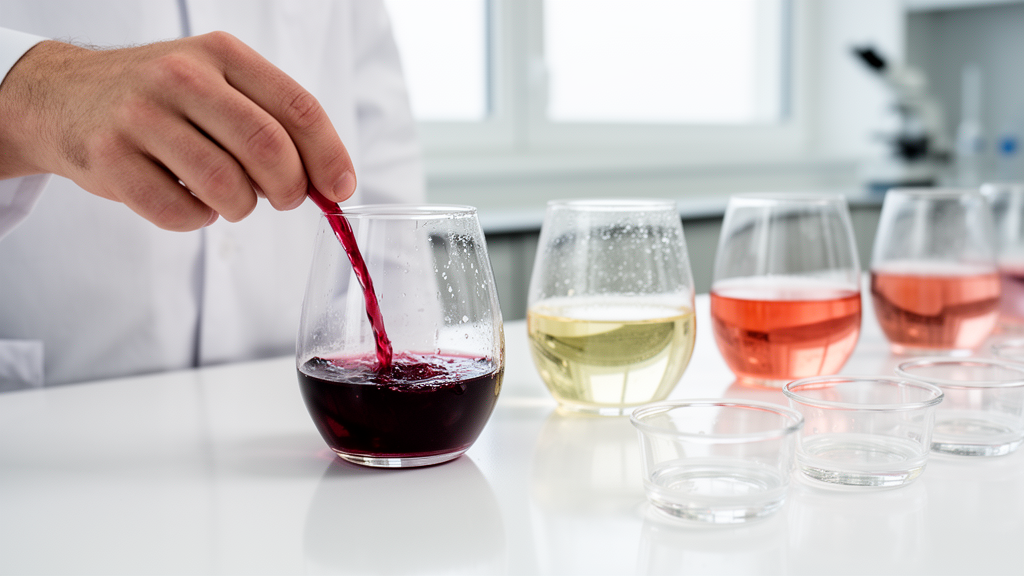
A comprehensive systematic review published in Agricultural and Food Economics has mapped the scientific and consumer landscape of dealcoholized wines, synthesizing peer-reviewed evidence to assess how beverage innovation intersects with evolving dietary habits and market expectations. Led by researchers Caterina Fucile Franceschini, Elisa Giampietri, and Eugenio Pomarici, the investigation evaluated research published up to mid-2025 to determine how consumers perceive, accept, and purchase wines subjected to partial or total alcohol reduction. Commonly designated as NoLo wines, these products encompass dealcoholized options containing less than 0.5 percent alcohol by volume and partially dealcoholized variants with alcohol levels below conventional thresholds. Although oenologist Carl Jung patented wine dealcoholization in 1907, the category long occupied a marginal commercial position. Societal momentum toward healthier lifestyles, strict drink-driving regulations, and rising grape sugar concentrations linked to climate change have recently propelled these alternative beverages into global prominence, establishing an evidence-based foundation for this evolving sector.
To structure their inquiry rigorously, the authors applied the Setting, Population, Intervention, Comparison, and Evaluation framework, known as SPICE, while executing systematic record selection following the Preferred Reporting Items for Systematic Reviews and Meta-Analyses protocol. The initial literature search concluded in June 2025 across Scopus and Web of Science, utilizing an extensive Boolean syntax combining keywords for dealcoholization, alcohol reduction, consumer behaviors, and hedonic liking indicators. The initial search yielded 171 candidate records, including 72 publications from Scopus and 99 from Web of Science. Following the removal of 53 duplicates, 118 articles underwent title and abstract screening. Of these, 75 records were excluded due to inaccessible full-text documentation or thematic misalignment with consumer preferences regarding dealcoholized wines, leaving 43 articles for full-text eligibility assessment. The authors incorporated seven additional relevant studies fulfilling the review criteria, establishing a final sample of 50 peer-reviewed investigations for comprehensive systematic analysis.
Bibliometric network analyses using VOSviewer and the Bibliometrix R package evaluated a subset of 47 articles, as three studies were omitted due to software formatting incompatibilities. The chronological output revealed limited scientific production between 2000 and 2008, gradual growth starting in 2014, and a sharp acceleration from 2023 onward. Geographic analysis indicated that research remains concentrated across just 19 countries, demonstrating a narrow international distribution. Australia led national citation counts with 290 citations, followed by France with 175 citations and the United Kingdom with 82 citations, alongside prominent publication output from Spain. Collaboration mapping across 161 authors identified Bucher and Deroover as central figures within interconnected collaborative clusters. Keyword co-occurrence mapping highlighted established motor themes such as wine perception, consumer behavior, and product quality, whereas niche areas focused on household purchasing data. Temporal keyword tracking revealed an evolving emphasis on global trade, social behavior, food safety, and advanced dealcoholization technologies like spinning cone columns.
A methodological evaluation of the 50 reviewed investigations revealed significant diversity in study designs alongside clear analytical imbalances. Literature reviews constituted the most frequent approach with 14 studies, reflecting strong academic emphasis on synthesizing emerging knowledge across the sector. Experimental studies ranked second with 12 publications, focusing on consumer reactions under controlled conditions. Survey-based methodologies represented seven studies, highlighting ongoing reliance on self-reported questionnaires to measure consumer attitudes, lifestyle values, and purchase intentions. Multi-method research combining qualitative and quantitative designs also accounted for seven publications, while qualitative interviews appeared in four studies. Statistical and econometric analyses comprised three investigations, and discrete choice experiments were utilized in only one study. The authors emphasized that the limited adoption of incentive-compatible choice experiments, real-world retail assessments, and longitudinal monitoring constrains deeper empirical understanding of how consumers navigate pricing and product choices in actual marketplace environments.
Technical assessments in the review showed that dealcoholization requires precise physical interventions to preserve wine volatile profiles and sensory quality. Vineyard practices like early harvesting, late pruning, and reduced canopy leaf area limit sugar accumulation, while pre-fermentation must filtration, native yeasts, and glucose oxidase treatments reduce fermentable sugars. During fermentation, non-Saccharomyces or genetically modified yeasts can reduce ethanol yields by roughly 1.5 percent by volume. Post-fermentation separation relies on vacuum distillation, pervaporation, nanofiltration, osmotic distillation, and reverse osmosis. However, removing ethanol strips away essential esters, higher alcohols, and terpenes, diminishing fruity and floral aromas. Research by Sam and colleagues showed that reverse osmosis operating pressures below or equal to 3.0 megapascals retain critical ethyl esters, preserving fruity notes and mouthfeel, whereas operating pressures exceeding 3.0 megapascals enhance perceived bitterness, acidity, and astringency. Furthermore, carbonyl compounds dominate aroma in completely dealcoholized wines, whereas ethyl esters govern aroma in partially dealcoholized products.
Consumer tasting studies indicate that acceptance thresholds depend on the extent of alcohol extraction and the grape variety. Research by King and Heymann using Chardonnay demonstrated that while trained panels detected sensory shifts at 0.4 percent alcohol reduction, a panel of 101 consumers detected no significant liking differences at 1.0 percent reduction, showing that reductions up to 2.0 percent preserve consumer acceptance. Similarly, Geffroy and colleagues established consumer rejection thresholds through paired preference tests, discovering that consumers tolerated alcohol reductions up to 2.8 percent in Chardonnay and up to 7.0 percent in Syrah before triggering significant rejection. In French home-use trials by Meillon and collaborators, Syrah wines reduced by up to 4.0 percent maintained stable consumer preference, whereas reductions exceeding 5.5 percent caused sharp declines in liking. Complementary breeding research by Moreno-Olivares and colleagues demonstrated that crossing Monastrell grapes produced wines with 2.5 to 3.0 percent alcohol maintaining excellent phenolic maturity and high sensory ratings.
Sensory quality remains the primary driver of consumer acceptance, frequently outweighing packaging design and informational messaging. A survey of 626 South African Generation Y consumers by Filter and Pentz revealed that taste was considered 20 times more influential than back-label information in purchasing decisions. Neuroimaging research by Frost and colleagues using functional magnetic resonance imaging examined brain responses to undisclosed low-alcohol and standard red wines, detecting heightened activation in the insula and cerebellum during low-alcohol tasting, which indicates increased attentional engagement with flavor cues. To improve sensory quality, reformulation approaches have explored sugar and aroma restoration. Podworny and colleagues found that young consumers evaluating dealcoholized Chardonnay required 40 grams per liter of added sugar to achieve acceptable liking scores between 5 and 6 on a 9-point scale. Additionally, Alises and collaborators showed that reintroducing 1.0 percent aromatic distillate recovered from spinning cone columns into Tempranillo rosé enhanced fruity aromatics without altering caloric or alcohol metrics.
External labeling significantly affects consumer perceptions, but tasting experiences often mitigate initial skepticism. Research by Bucher and colleagues and Masson and collaborators demonstrated that low-alcohol labels frequently generate negative quality expectations, lowering initial willingness to pay. However, in blind tastings where alcohol levels were undisclosed, consumer evaluations of low-alcohol wines around 9.0 percent alcohol did not differ significantly from standard wines. In Australian studies by Saliba and colleagues, initial willingness to purchase low-alcohol wine was 16 percent, but increased to 40 percent when taste matched standard wine. Receptivity is highest among women, young adults aged 18 to 39, and occasional wine consumers. Conversely, frequent and knowledgeable consumers generally prefer standard alcohol levels. Generational differences also emerge: while Palmer and colleagues observed younger consumers avoiding dealcoholized beverages due to an intent to achieve intoxication, broader market reports indicate expanding interest among Generation Z and Millennials pursuing wellness and moderation.
Economic assessments reveal complex relationships between manufacturing costs, retail pricing, and consumer demand. Bottle prices range from under 5 euros to over 100 euros, yet consumers often anticipate discounts for dealcoholized versions. Stasi and colleagues observed that consumers expected price reductions of approximately 0.085 euros per percentage point of alcohol removed. Large-scale purchasing records present contrasting findings regarding alcohol reduction. An analysis of British purchasing data by Anderson and colleagues covering 69,803 households and over 4 million transactions showed that low-alcohol product introductions did not reduce overall alcohol purchases between 2015 and 2019. In contrast, Spanish household data from 2017 to 2022 showed that purchasing wines containing 0.5 percent alcohol or less was associated with decreased purchases of higher-alcohol wines. Regarding overcompensation, laboratory experiments by Vasiljevic and colleagues in a simulated bar setting observed higher consumption when wine was labeled at 4.0 percent alcohol, though real-world studies by Bucher and colleagues found no compensatory consumption.
The systematic review concludes that resolving regulatory fragmentation and advancing behavioral research are vital for the dealcoholized wine sector. Global market value exceeded 2.84 billion dollars in 2025 and is projected to reach 7.64 billion dollars by 2035, with Germany recording a 6.0 percent consumption share. However, regulatory frameworks remain inconsistent internationally. While the International Organisation of Vine and Wine and European Union Regulation 2021/2117 recognize dealcoholization, national rules diverge: France permits dealcoholization up to 6.0 percent alcohol for Protected Geographical Indication wines, whereas Italian ministerial decrees between 2024 and December 2025 prohibited dealcoholization of protected wines. To support market development, the authors advocate applying the Theory of Planned Behavior and hybrid discrete choice models, incorporating neuromarketing tools like eye-tracking, assessing environmental life-cycle impacts, and expanding cross-cultural studies across underserved Asian markets. Addressing these methodological and regulatory gaps will clarify consumer decision-making as low-alcohol wines evolve within global viticulture.
Subject of Research: Consumer behavior, sensory science, and market dynamics of dealcoholized wines
Article Title: A systematic review of consumer research on dealcoholized wines: reviewing the evidence, shaping the future of research
Article References: Fucile Franceschini, C., Giampietri, E., & Pomarici, E. (2026). A systematic review of consumer research on dealcoholized wines: reviewing the evidence, shaping the future of research. Agricultural and Food Economics, 14(1), Article 38. https://doi.org/10.1186/s40100-026-00483-w
Image Credits: AI Generated
DOI: 10.1186/s40100-026-00483-w
Keywords: dealcoholized wine, low-alcohol wine, consumer behavior, sensory evaluation, food economics, systematic review, wine market, oenology, systematic, review, consumer, research
Dining and Cooking