
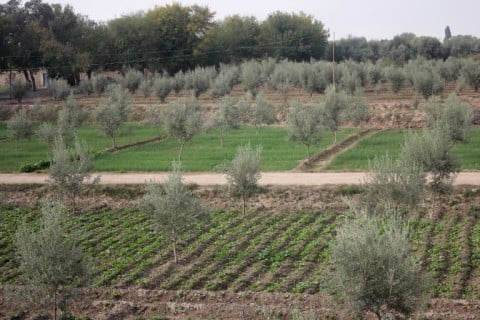
In November, the 500 villagers of Saidan Arabi hand-pick olives from their organic orchards and cold-press them at an experimental mill in a lush, mud-walled garden.
“We press the olives immediately to ensure better quality,” Afghan said.
The oil is sold for up to $17 per kilogram in the capital Kabul’s organic-product shops.
Orzala has planted thousands more olive trees in another village in Nangarhar, creating 16 permanent jobs across the two areas.
The plant specialist, who fled Afghanistan as a child, studied in the United States and returned in 2003, hopes to establish a permanent mill and expand sales across Afghanistan and beyond.
– A Mediterranean landscape –
Along the road from provincial capital Jalalabad to the Pakistani border, vast olive groves stretch across the landscape, giving it an almost Mediterranean character.
They date to the 1960s, and a Soviet-built mill began making oil in 1985. But successive wars later destroyed nearly half of Afghanistan’s total area for olive cultivation.
Dining and Cooking