
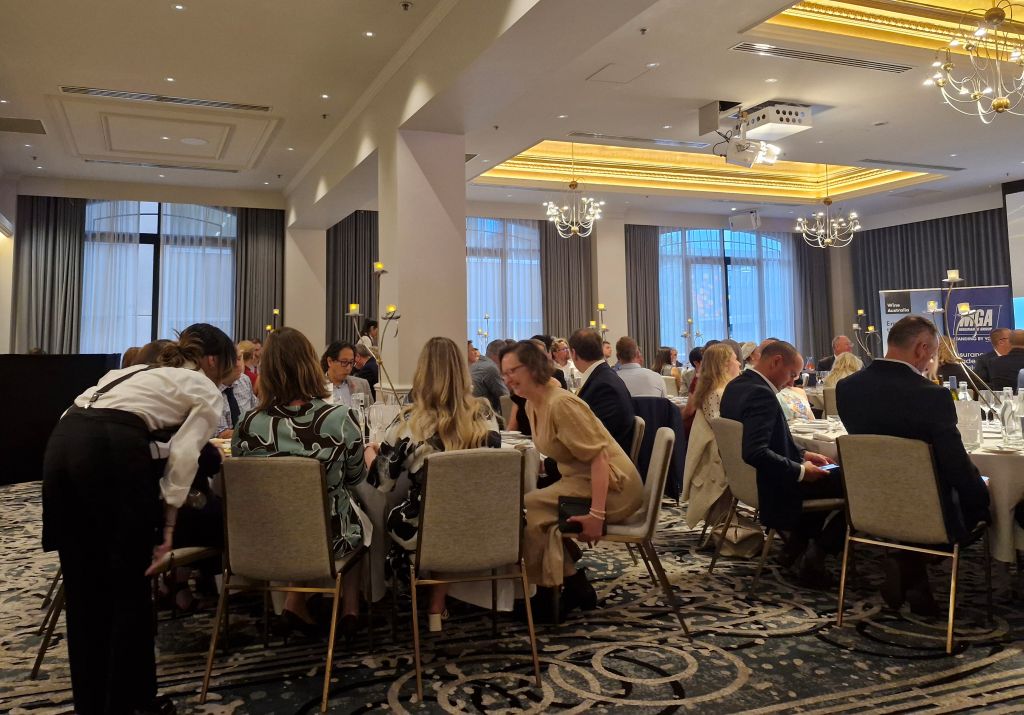
Affinity Labs’ Grapevine Clonal ID service, developed by the Australian Wine Research Institute (AWRI), has been named 2026 Supplier of the Year at the Wine Industry IMPACT Awards (WIIA). The winners were announced last night at a gala dinner at The Playford Hotel, Adelaide.
Hosted by the Wine Industry Suppliers Association (WISA) and officially opened by the Hon Russell Wortley MLC, the awards recognise businesses that work with wineries and growers “to lift the capability and competitiveness of Australian grape and wine producers”. WISA said the winners showed how suppliers, working hand in hand with industry, are directly supporting the success of the Australian and New Zealand wine sector, as well as how important innovation is across the value chain.
An independent panel of 24 judges from across the sector scored every nomination on impact, relevance and innovation. The panel included representatives of Wine Australia, the AWRI, Treasury Wine Estates, Seppeltsfield and Sustainable Winegrowing Australia. No judge assessed a category in which their own organisation was nominated. Each winner received a hand-blown glass trophy made in WISA’s colours by Adelaide artist Emma Klau.
Supplier of the Year: Affinity Labs
Grapevine Clonal ID is a world-first service. It reads a vine’s whole genome and matches it against a reference library of more than 1,000 grapevine genomes, giving growers, nurseries and wineries objective evidence of clonal identity. It is already validated for Shiraz, Cabernet Sauvignon, Chardonnay and Riesling. The board of Australian Grape & Wine judged the award from all category finalists. Affinity Labs also won the Viticulture & Grapegrowing Award.
“For Australia, home to some of the world’s oldest plantings, Clonal ID can confirm the identity of old-vine material and back our provenance claims with science,” said Helen Strachan, chair of Australian Grape & Wine.
“Our industry is at a turning point, with vineyards being removed and new plantings weighed up, and growers need certainty about exactly what is in the ground. This is a great example of industry shaping research and turning it into a practical service that will guide better decisions for decades to come.”
Liz Schoen, executive chair of WISA, called the wine supplier community is a powerful force.
“It is amazing to see how our members, working hand in hand with industry, are directly supporting the success of the Australian and New Zealand wine industry, reinforcing how important innovation is across the value chain. Every finalist has made a real difference to the competitiveness of Australian wine. Congratulations to them all, and I’m already looking forward to next year’s nominations,” she said.
The ‘Wine Australia’ Technology & Digital Innovation Award: InnoVint, with Hill-Smith Family Estates
When Hill-Smith Family Estates’ winery software reached end of life, InnoVint went live across all six of its winery sites in under three months, before vintage, and took the cellar fully paperless. The judges called it a standout example of supplier–winery collaboration: a platform tailored to how each winery operates, a full system replacement within a single vintage, and sustained impact across six sites.
Runner Up: BevSage
The ‘Sig’ Winemaking & Oenology Award: Vason Group, X-PLANT
Applied in the vineyard, Vason’s inactivated yeast range helps vines handle heat and water stress. In the winery, that means better-preserved aromatic precursors and phenolics, and harvest timing driven by flavour rather than rising alcohol. The judges said improving vine health and combating disease pressure while mitigating the impact of climate change is highly impactful and relevant. Scores were very close, and the judges also acknowledged the relevance, ease of use and reduced manual handling of runner-up, Fermentis’ E2U yeast range.
Runner up: Fermentis
The ‘Southern Premium Vineyards’ Viticulture & Grapegrowing Award: Affinity Labs – Grapevine Clonal ID
The judges praised its scientifically validated DNA method for identifying grapevine clones as an outstanding example of research put into practice. It helps growers and nurseries confirm that planting material is true to type and identify valuable heritage vines.
Runner up: Ripen Tech; Vason Group
The ‘MGA Insurance’ Sustainability Award: Visy
Visy has invested heavily in raising the recycled content of its glass packaging, upgrading its glass beneficiation sites at Laverton and Penrith and building a new site at Yatala in Queensland. The judges commended the project’s holistic approach across energy, emissions, raw materials and waste, and its large-scale, sector-wide impact on the industry’s biggest source of carbon emissions.
Runner up: Deacam Engineering, with Southern Light Vineyards; BioGone
The ‘Manheim Australia’ Packaging & Design Award: Australian Vintage – Poco Vino
Launched in 2025, Poco Vino is a format-first brand built around stylish 187ml single-serve bottles. The judges hailed it as a rare industry “gamechanger” and a standout example of consumer-led innovation. Its single-serve format, strong branding and integrated marketing have engaged new consumers, created new drinking occasions and delivered substantial sales growth.
Runner up: Amorim, Spark One Xpür
The ‘WISA’ Engineering & Equipment Award: Parsec by Enartis, EVO2FERM
EVO2FERM combines Winegrid real-time fermentation data, Parsec’s yeast nutritional requirements technology and Enartis nutrients. It adjusts nutrient and oxygen additions to what the yeast needs, rather than following a fixed schedule. The judges praised it as a highly innovative advance in fermentation management, improving control, wine quality and efficiency while reducing labour and safety risks, with strong relevance for wineries of all sizes.
Runner up: Vinarchy, with the AWRI and Wine Australia
Are you a Daily Wine News subscriber? If not, click here to join our mailing list. It’s free!
Have you got news to share? Contact [email protected] for the chance to be featured.
Dining and Cooking